
Workplace Exposure Limits (WEL) in Australia: a guide for mobile equipment operators
From 1 December 2026, Workplace Exposure Limits replace Workplace Exposure Standards for airborne contaminants. This guide explains what's changing, what it means for dusty and diesel-heavy work environments, and where operator cabin air quality fits as an engineering control.
Scope: Airborne contaminant exposure limits for Australian mining, construction, and industrial workplaces.
Overview
What Are Workplace Exposure Limits?
Replaces
WES
Applies from
1 December 2026
Enforceability
Hard limits
A WEL is a limit, not a guarantee of safety — some workers can be affected below it. That's why the law requires you to eliminate or minimise exposure so far as is reasonably practicable, not simply stay under the number.
A Workplace Exposure Limit (WEL) is the maximum airborne concentration of a contaminant, such as dust, fume, gas, vapour, or mist, that a worker may be exposed to. Many of these contaminants can't be seen or smelled, but can still be present at harmful levels.
Australia is moving from Workplace Exposure Standards (WES) to Workplace Exposure Limits. The change follows a national review of the WES against current health evidence, the first since 2003, and a decision to rename them "limits" to make clear they are values that must not be exceeded, in line with international terminology.
Until 1 December 2026, PCBUs must keep complying with the WES list. From that date the WEL list applies nationally, following implementation into Commonwealth, state, and territory WHS laws.
The detail
What's Changing in the Move to WEL
Most limits carry over unchanged, but the review revised some values, added limits for new contaminants, and updated how additional health risks are flagged. Check the WEL list against the substances you actually use or generate.
The new 8-hour limits for the five most relevant to enclosed cabins:
Crystalline Silica
0.05 mg/m³
was 0.05
Under Review
Respirable Coal Dust
1.5 mg/m³
was 1.5
Limit Retained
Diesel Particulate Matter
0.01 mg/m³
no previous national limit
New Limit
Hydrogen Sulphide (H₂S)
10 ppm
was 10
Limit Retained
Sulfur Dioxide (SO₂)
0.25 ppm
was 2
↓ 8× lower
Diesel particulate matter (DPM) gets a nationally binding workplace limit for the first time, at 0.01 mg/m³ as respirable elemental carbon. There was no national exposure standard for it before. For industries that followed the Australian Institute of Occupational Hygienists (AIOH) guideline of 0.1 mg/m³, and NSW mines were held to 0.1 mg/m³, are now facing a tenfold reduction, measured on a different basis. For diesel-heavy operations, it is the single most significant change to plan around.
The three types of limit
Each WEL is expressed as one or more of three limit types. Knowing which applies matters, because each is measured differently.
Note: A TWA can't be traded up for shorter shifts.
Most substances carry more than one of these limit types, and all of them have to be met at once. For example, hydrogen sulphide has both a TWA of 10 ppm averaged over an 8-hour day and a STEL of 15 ppm averaged over any 15 minutes. Air can stay within the 8-hour average and still breach the short-term limit during a spike, so a substance is only within its WEL when every limit type it carries is met. Several contaminants relevant to heavy industry, including respirable crystalline silica, are subject to further impact analysis before their limits are finalised. Until that's complete, their existing WES values continue to apply.
Notations
New sensitiser and ototoxicity flags
The old sensitiser notation is split into DSEN (skin) and RSEN (airways). A new OTO notation flags contaminants that can increase hearing-loss risk. It is relevant where exposure happens alongside noise, as it often does in machine cabins. Carcinogenicity notations are removed. Cancer hazard is now referenced via safety data sheets and HCIS rather than the exposure list itself.
Separately, a defined group of non-threshold genotoxic carcinogens is listed with no assigned limit. For these, the duty is to eliminate exposure so far as is reasonably practicable, not manage it to a number.
What you should do
Three Steps to Prepare
Safe Work Australia frames preparation as three steps. Working through them now, during the transition period, gives you time to put controls in place before the limits become enforceable.
Consult the WEL list for the airborne contaminants you use or generate, and check whether any limits relevant to you have changed.
Ensure no worker is exposed above the relevant limit. Where exposure is uncertain, carry out air monitoring to determine the actual concentration.
Eliminate or minimise risk so far as is reasonably practicable using the hierarchy of controls, then review that those controls work as intended.
For the full contaminant list, current limit values, and your jurisdiction's implementation timing, refer to Safe Work Australia and your WHS regulator. The rest of this page covers where cabin air quality fits into "Step 3 - Control the hazard".
Scope
Who Do Workplace Exposure Limits Apply To?
WEL applies to any workplace where people may be exposed to airborne contaminants generated by work processes. In heavy industry, that frequently means mobile equipment operators working inside enclosed cabins in dusty or diesel-heavy environments, where contaminants like respirable dust, crystalline silica, and diesel particulate are part of daily operation.
If your operators spend shifts in machine cabins near drilling, loading, hauling, crushing, or fixed plant, cabin air quality is a relevant part of how you manage their exposure.
Industries this may include:
OPerator Cabin review
What to Review Across the Operator Cabin System?
Mobile equipment cabins can help separate operators from the external work environment, but cabin performance depends on the complete system condition. A cabin should be reviewed as a system.
01
Cabin Sealing
Damaged seals, poor door fitment, cable penetrations, or unsealed gaps can allow contaminated air to enter the operator enclosure.
02
Fresh Air Intake
Fresh air intake location and filtration can affect the quality of air supplied into the cabin.
03
Cabin Pressurisation
Positive pressure can help reduce contaminant ingress when the cabin is properly sealed and the system is maintained.
04
HEPA Filtration
High-efficiency filtration can support reduction of fine particulate entering or circulating inside the cabin.
05
CO₂ Monitoring
CO₂ visibility helps review ventilation and enclosed cabin air quality, especially when cabins are sealed or recirculating air.
06
Monitoring & Alarms
Operators and maintenance teams need visibility when system performance changes or drops outside expected operating conditions.
07
Filter Maintenance
Filter condition, replacement intervals, and correct installation affect long-term system performance.
08
Service Records
Commissioning, servicing, filter replacement, and maintenance records can support ongoing review and risk management.
A cabin air quality system may support airborne contaminant exposure control, but it does not replace site-wide risk assessment, exposure monitoring, administrative controls, respiratory protective equipment, health monitoring, or duty holder verification.
How we help
Supporting the cabin side of your exposure control
Pressurisation is one of the most effective engineering controls for reducing the contaminants that reach an operator inside the cabin. BreatheSafe's system is built on four pillars that work together. Each one helps maintain filter efficiency, extend filter life, and give the operator consistent protection through the shift.
Four pillars of BreatheSafe air pressurisation system
Positive Pressure
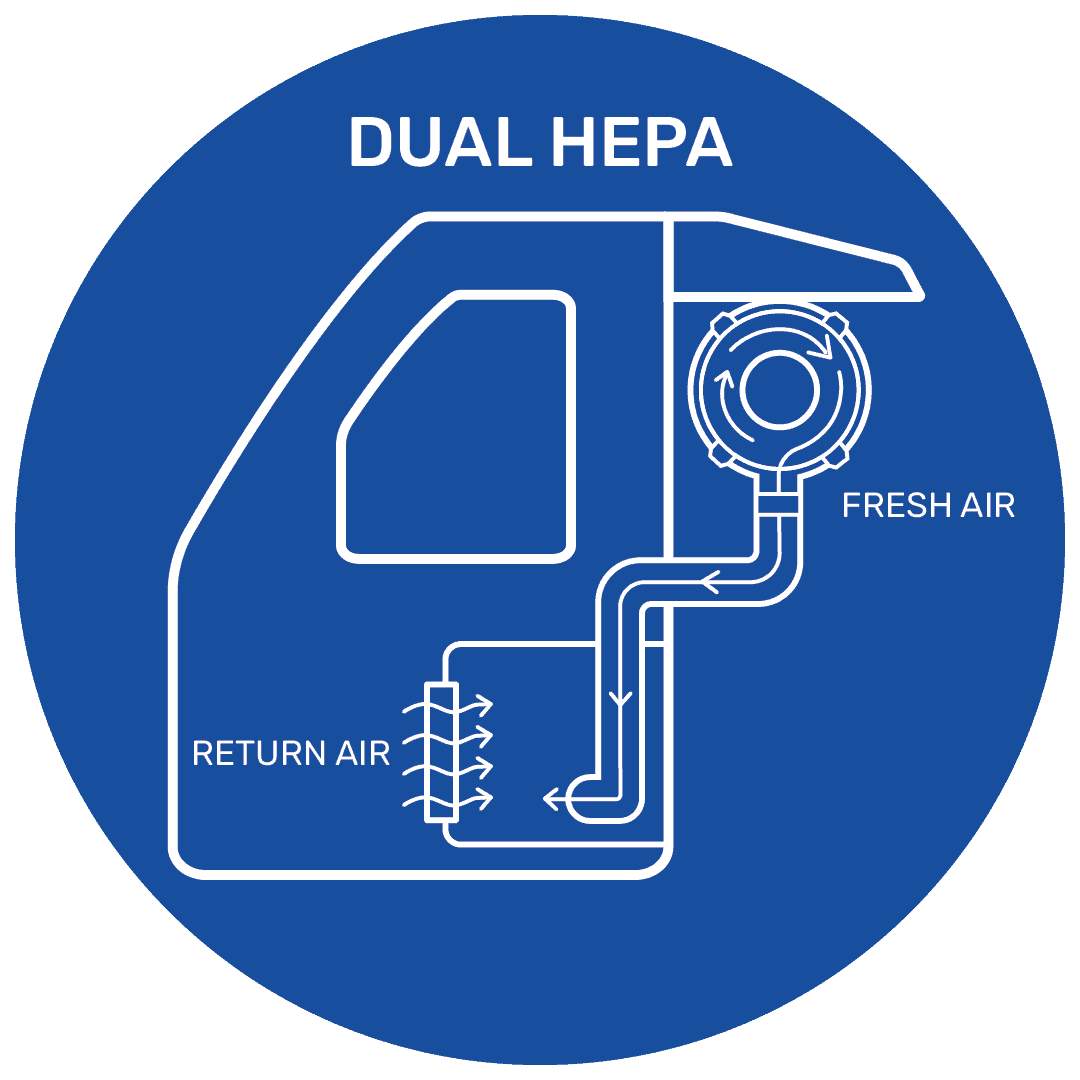
Dual HEPA Filtration
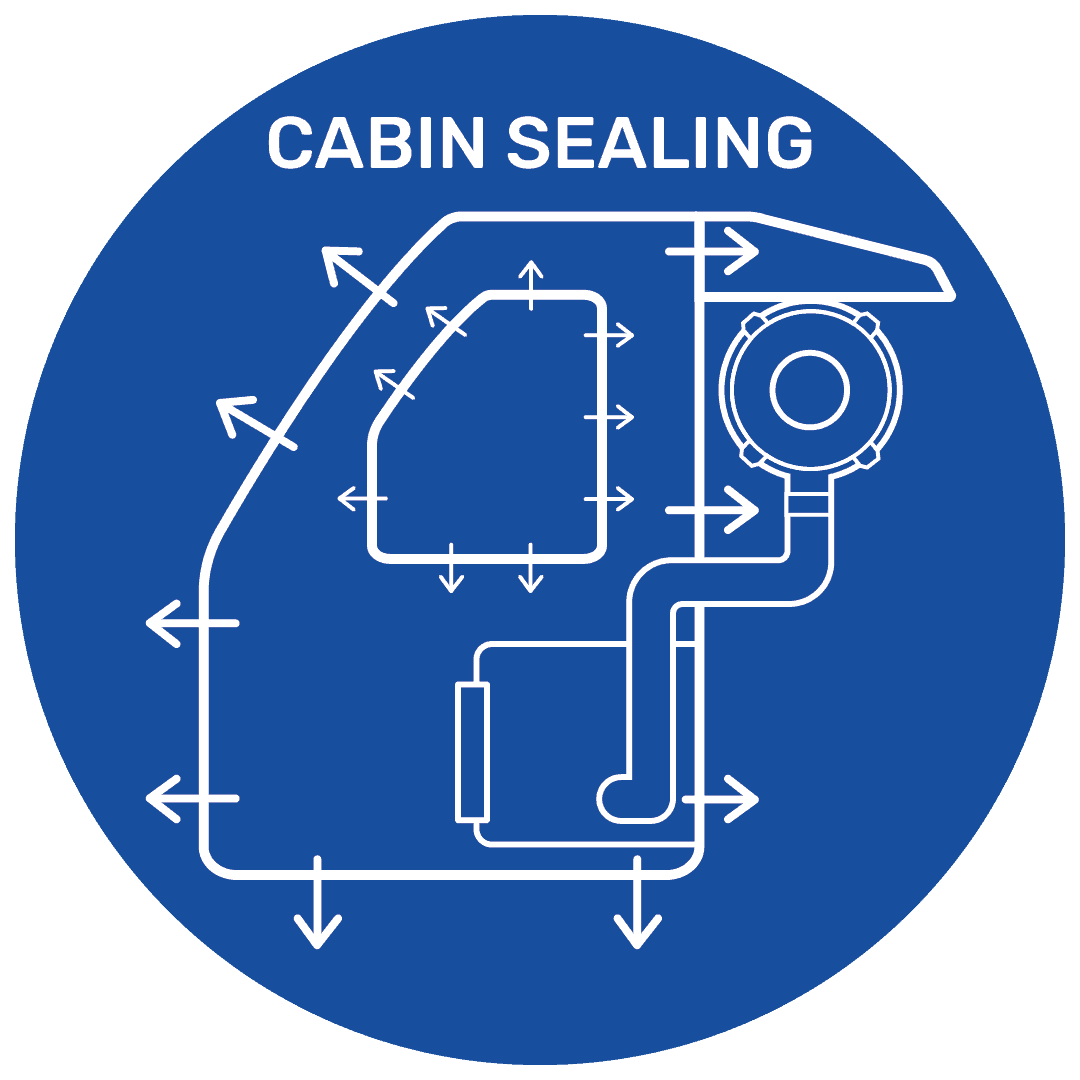
Cabin Sealing

Air Quality Monitoring
Take it with you
Mobile equipment cabin review checklist
Run through these with your fleet in mind. Anywhere you can't tick the box is a useful starting point for a conversation
Frequently Asked Questions: Workplace Exposure Limits
When do Workplace Exposure Limits take effect?
What's the difference between WES and WEL?
WEL is the renamed and reviewed version of WES. The name change signals that these are enforceable limits that must not be exceeded. The review also revised some limit values, added contaminants, updated advisory notations, and set non-threshold genotoxic carcinogens apart on a separate list.
What are the three types of exposure limit?
Does WEL apply to mobile equipment cabins?
WEL applies to airborne contaminants in workplaces broadly. Mobile equipment cabins are one relevant area, because operators may be exposed to dust, silica, or diesel particulate during work. Cabin air quality is one way to manage that exposure.
How does cabin air quality fit into WEL compliance?
Does cabin pressurisation reduce operator exposure to dust?
CAbin performance Review
Review your fleet before the 2026 deadline
Send us your machine details and site conditions. We'll help review suitable cabin pressurisation, HEPA filtration, monitoring, and maintenance options for your fleet.
— Live particulate monitoring inside the cabin, in real time
— Exposure tracked as an 8-hour TWA that WEL is based on
— Remote dashboard access to cabin air quality across your fleet