
Activated Carbon Filter
Remove Odours and Harmful Air Particles
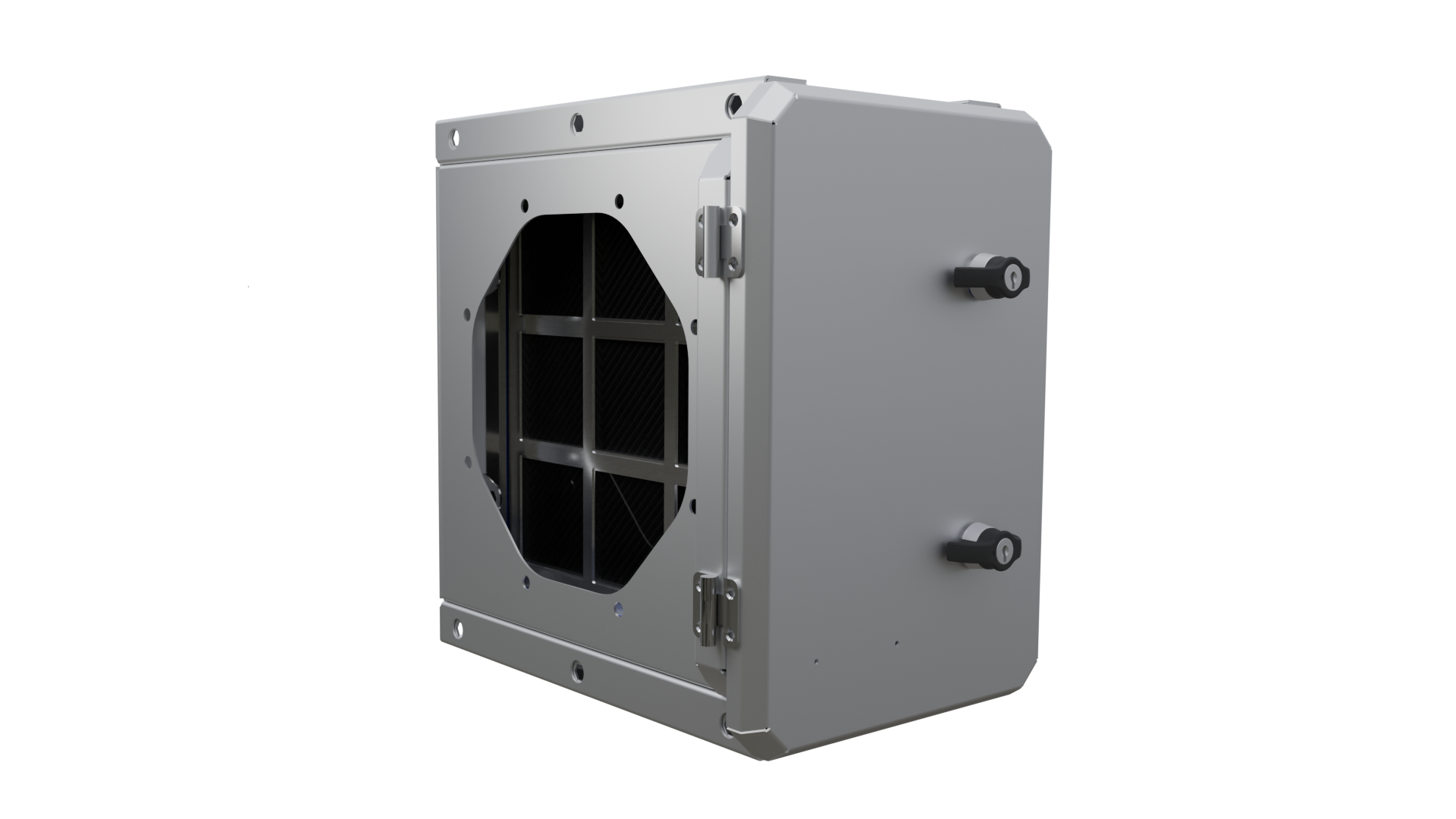
Hover over the image to see the dual-stage cartridge
Activated Carbon + HEPA Filter
Remove Odours and Harmful Air Particles
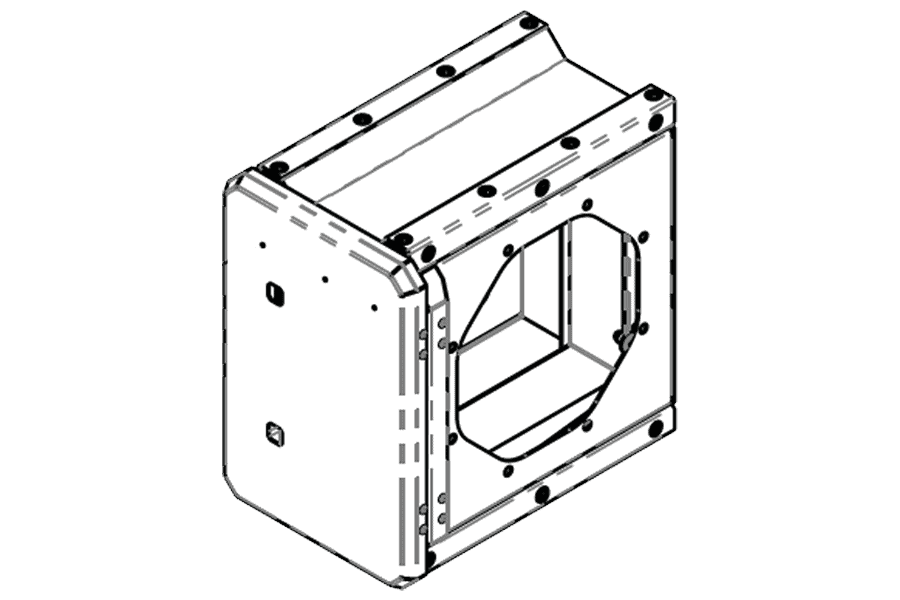
Connected to a BreatheSafe pressuriser, this dual-stage cartridge combines HEPA H13 filtration with KOH-impregnated activated carbon to remove fine dust, VOCs, diesel fumes, and acidic gases.
Optimised for low airflow resistance and high adsorption efficiency, it integrates seamlessly with BreatheSafe pressurisation systems and is easily replaced during routine maintenance.
Applications
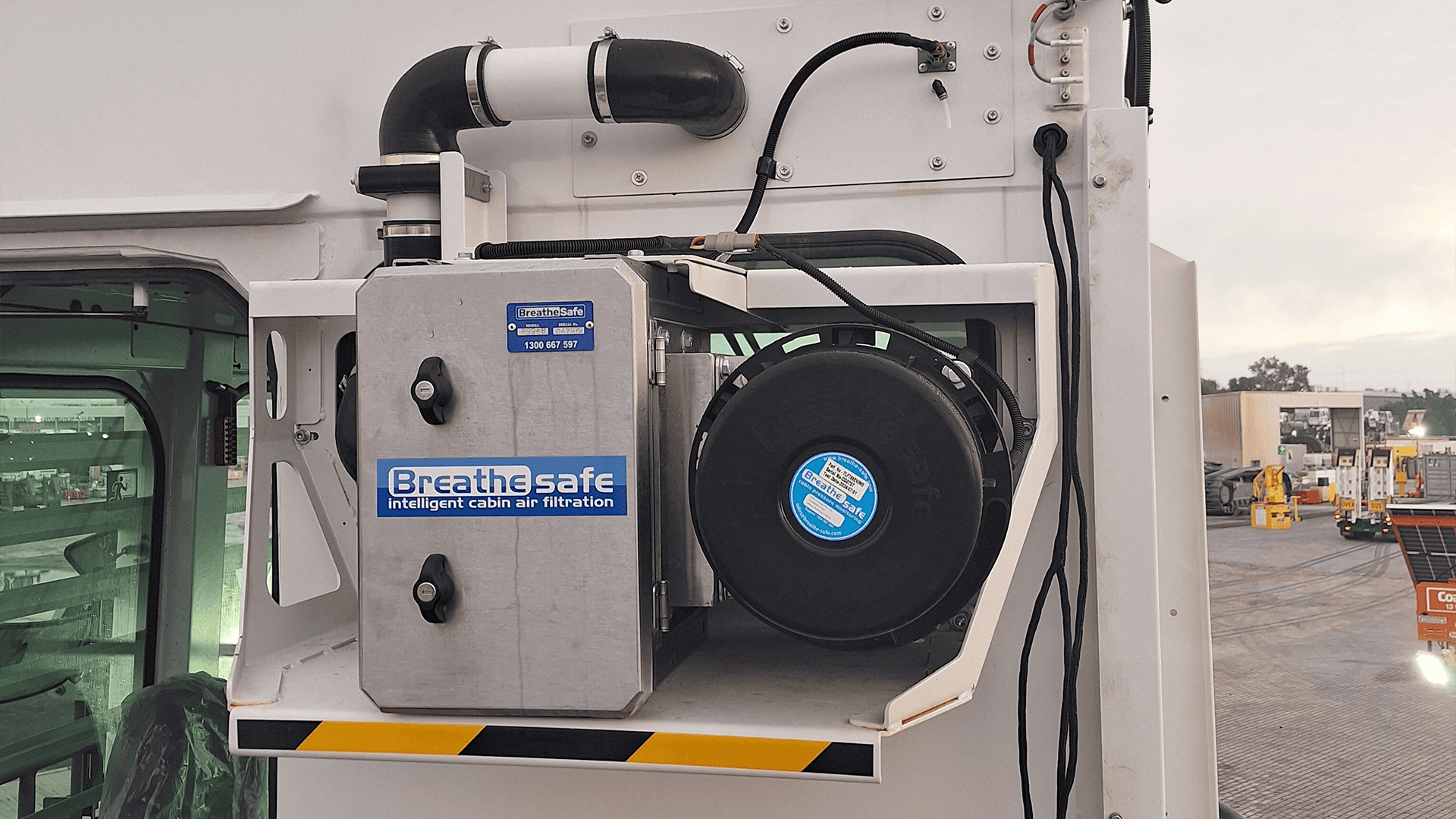
Operator Cabin Pressurisation
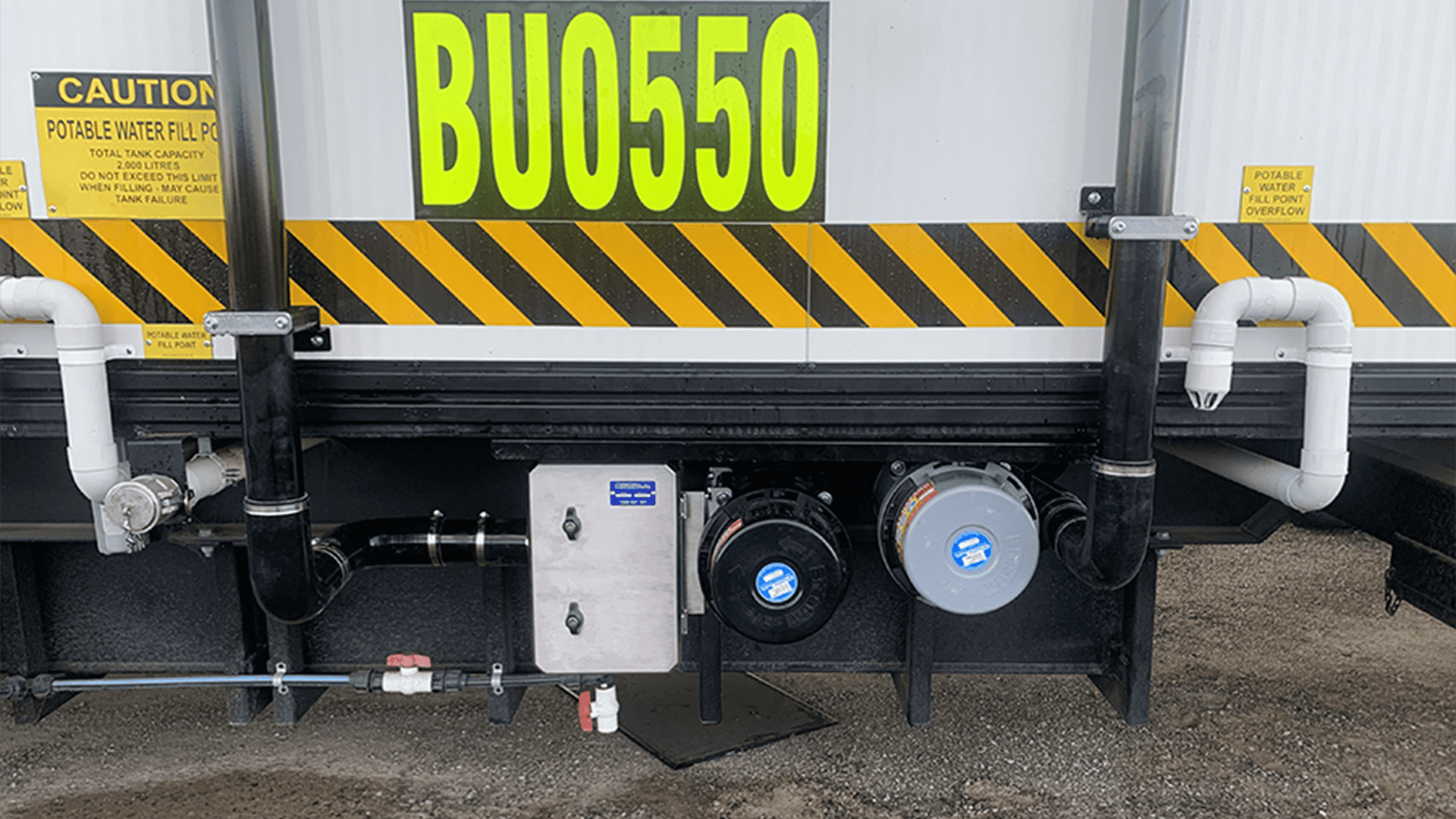
Clean Room Pressurisation
Gallery
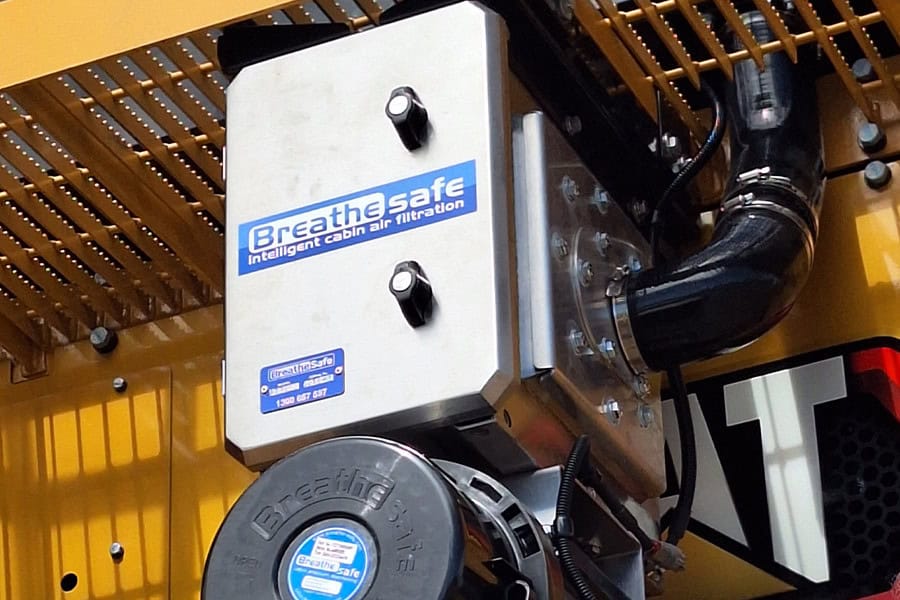
Caterpillar 785D Activated Carbon Kit
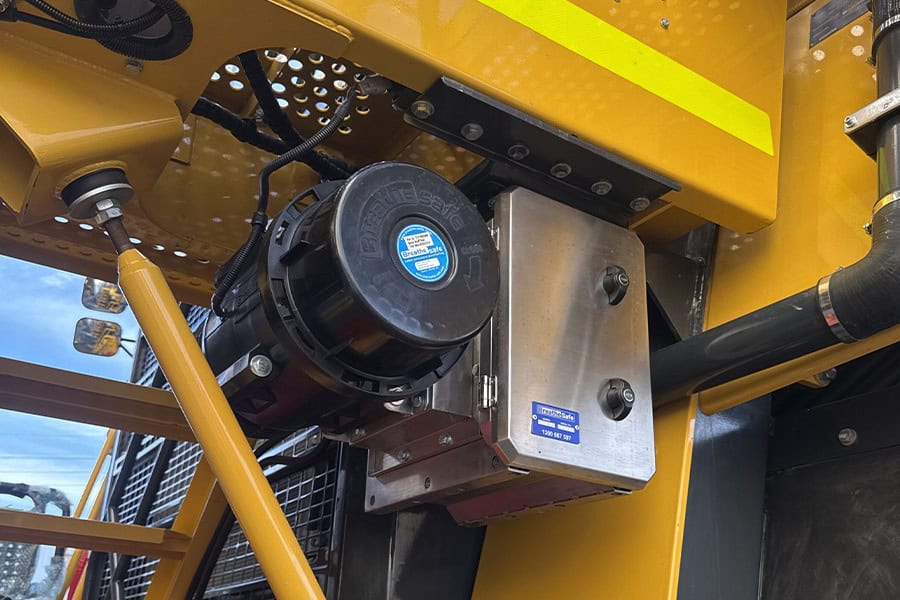
Komatsu HD785-7 Activated Carbon Kit
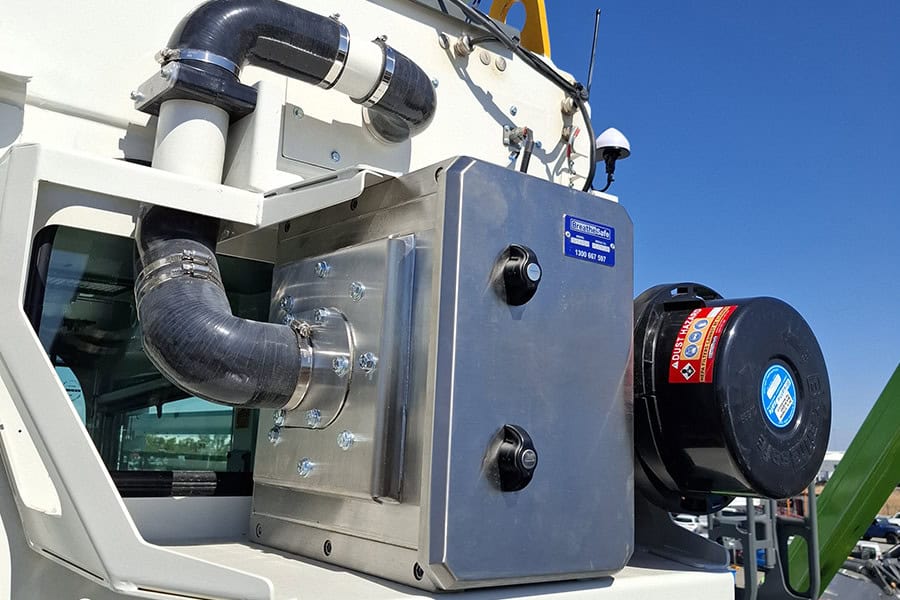
Liebherr R9400 Activated Carbon Kit
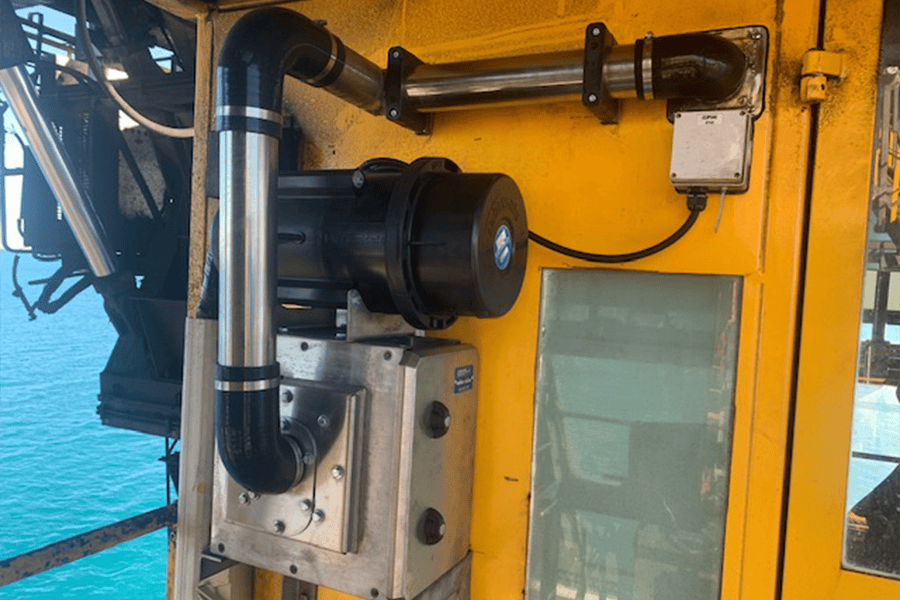
Ship Loader Activated Carbon Kit
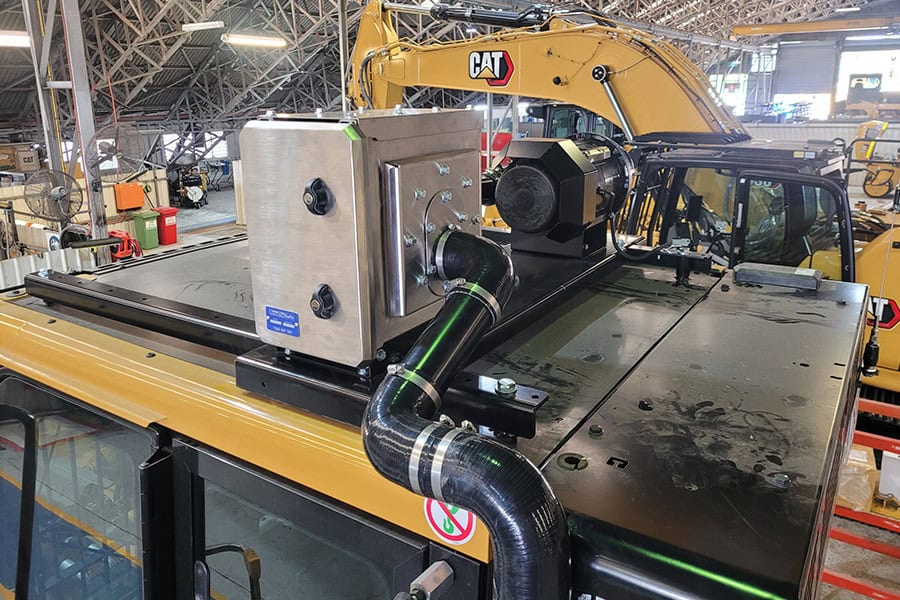
Caterpillar 963k Activated Carbon Kit
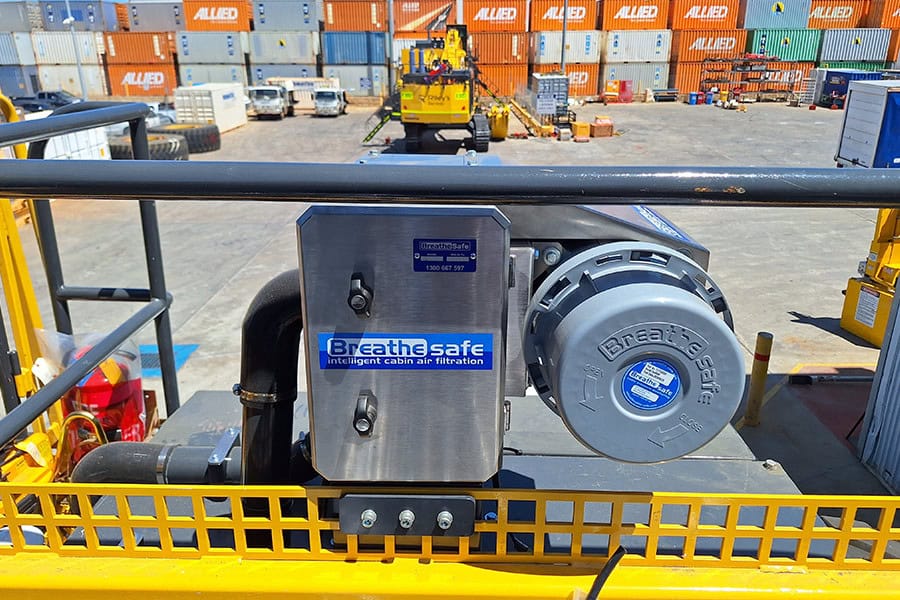
Komatsu WE1850-3 Activated Carbon Kit
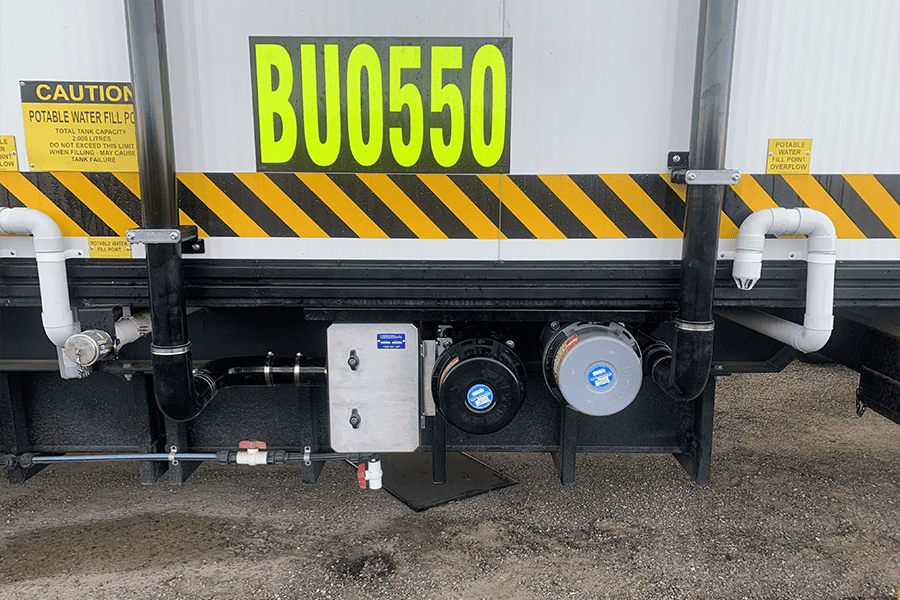
Portable Crib Room
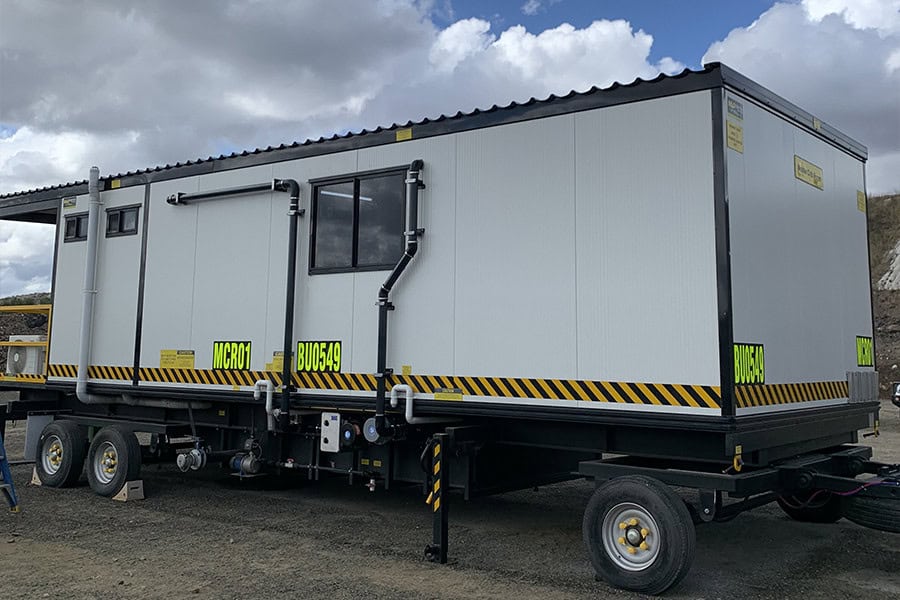
Portable Crib Room
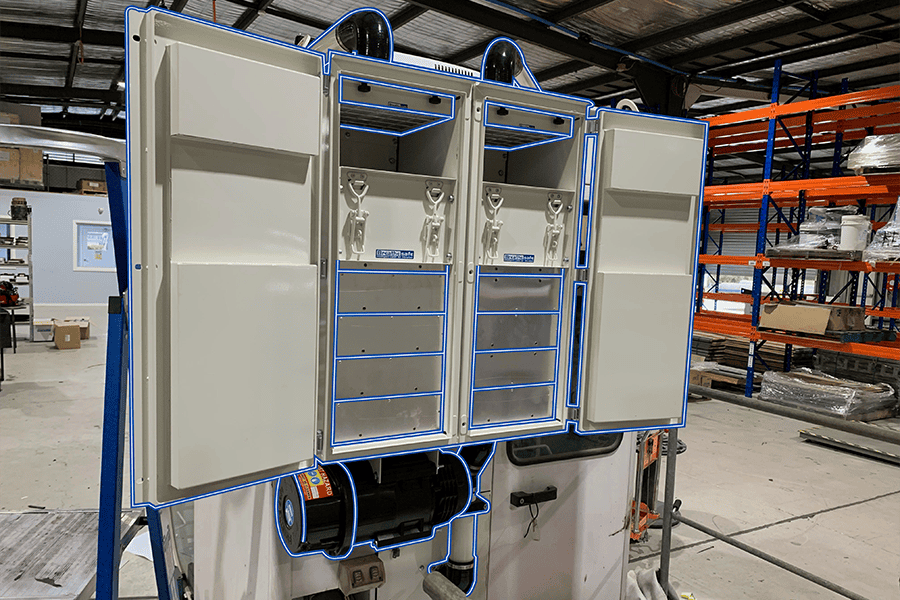
Comansa Flat-Top Crane 21LC750
Features
Hover over the images to play the videos
Double Layered Filter Cartridge
Impregnated activated carbon removes gases while a HEPA panel filter captures fine particles, including carbon dust.
Rapid Filter Replacement
The sealed, latch-secured cartridge allows fast and consistent filter replacement.
Designed for Extreme Conditions
Engineered to maintain gas adsorption performance in high-temperature and dense-gas environments.
Specification
| Parameter | Value |
|---|---|
| Length | 355.15 mm |
| Width | 305 mm |
| Depth | 152.4 mm |
| Carbon Weight | 2.7 kg |
| Cartridge Weight | 6.25 kg |
| Gas Filter Type | Honeycomb Activated Carbon Monolith, Impregnated with 15% KOH |
| Carbon Impregnation | KOH impregnation enhances absorptivity of acidic compounds |
| Suitable for Removing | SO2, H2S, H2SO4, VOCs, NHMCs, Diesel Fumes etc. |
| Maximum Temperature | 80°C (176°F) |
Frequently Asked Questions
What is an activated carbon filter and why is it needed?
An activated carbon filter is used in industrial air filtration systems to remove gases, fumes, and chemical contaminants that cannot be captured by HEPA filters.
When connected to a cabin pressurisation system or a clean room pressurisation system, an activated carbon cartridge provides an additional filtration stage to remove:
- Diesel fumes and exhaust gases
- Volatile organic compounds (VOCs)
- Odours and acidic gases
This is critical in mining and industrial environments where airborne hazards are not limited to dust. While HEPA filtration removes particles, an activated carbon filter is required to control gas-phase contaminants and improve overall air quality.
How does an activated carbon filter work?
An activated carbon filter works through a process called adsorption (or often described as "neutralising" odours), where gas molecules attach to the surface of the carbon material.
Activated carbon has an extremely high surface area with millions of microscopic pores, allowing it to trap and hold gases, fumes, and chemical vapours as air passes through the filter.
Unlike HEPA filters, which physically capture particles, activated carbon filters are designed specifically to remove gaseous contaminants from the air stream.
What contaminants can an activated carbon filter remove?
An activated carbon filter is highly effective at removing:
- Diesel fumes and exhaust gases
- Volatile organic compounds (VOCs)
- Odours and smoke
- Acidic gases and chemical vapours
These contaminants are commonly found in industrial, mining, and heavy equipment environments and cannot be removed by standard particulate filters alone.
Do I need an activated carbon filter if I already have a HEPA system?
How often do I need to replace activated carbon filters?
Related Products
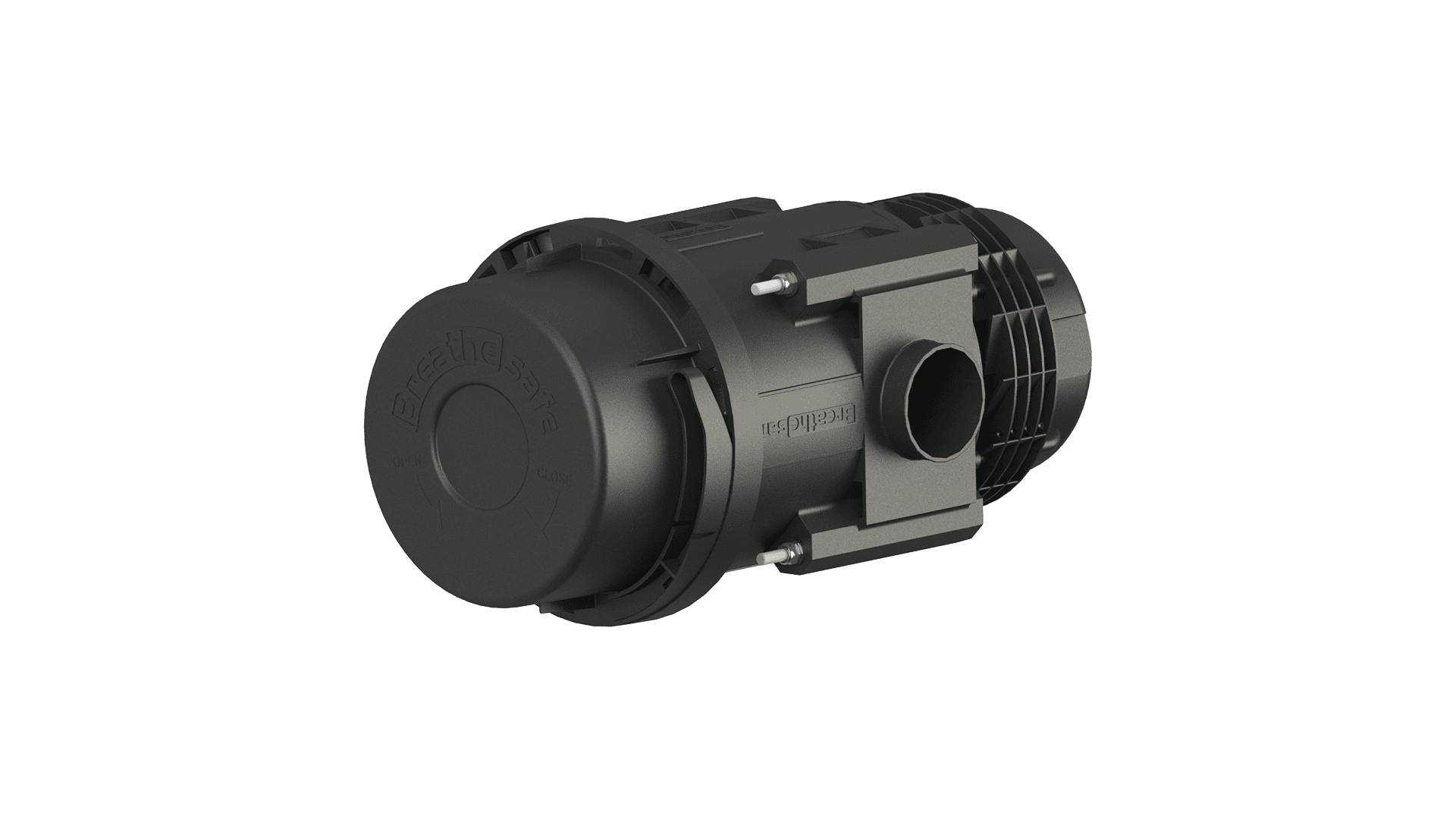
HEPA Pressuriser

HEPA Return Air Filter
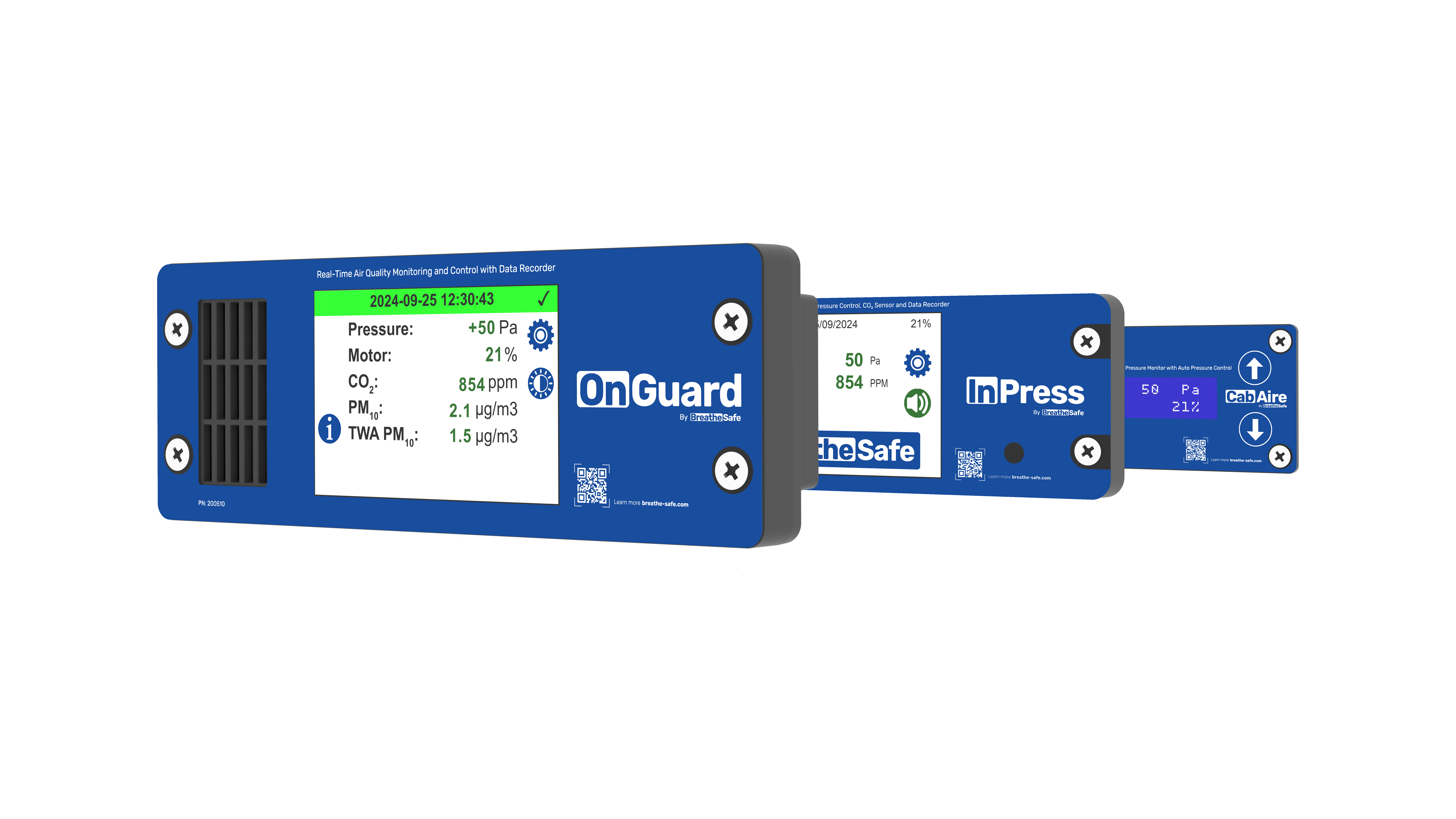
Air Quality Controllers