

Advanced Protection for Sensitive Electronics
Protect sensitive electronics by maintaining a dust-free and temperature-monitored environment.

Komatsu 830E-4 Electrical Cabinet
VoltAire for Electrical Enclosure
Eliminates the Need for Regular Cabinet Cleaning
High-Pressure Filtration Technology
Utilises advanced high-pressure filtration technology, generating positive pressure inside the cabinet to create a clean and controlled environment.
Reduce Maintenance and Enhance Safety
Eliminates the need for regular cleaning, reduces maintenance costs and protects workers from exposure to hazardous dust and potential arc flash.
Thermal Management
Intelligently monitors cabinet temperature and automatically increases clean airflow when heat levels rise above the threshold, helping to cool components and maintain optimal performance.
Applications
- High-Voltage Cabinets – Require protection from dust and moisture to prevent electrical arcing, insulation breakdown, and equipment failure.
- Low-Voltage Cabinets – Need a clean and controlled environment to ensure stable performance and prevent disruptions in sensitive electronics.
- Motor Control Cabinets – Must remain free from dust accumulation on contactors and relays, which can cause malfunctions, overheating, and reduced operational efficiency.
- Distribution Boards – Require protection to prevent short circuits, corrosion, and electrical faults, ensuring system reliability and longevity.
- Contactor Cabinets – House delicate switching mechanisms that can degrade if exposed to dust, moisture, or airborne contaminants, leading to frequent maintenance and increased safety risks.
- Switchboard Cabinets – Must be kept free from dust and temperature fluctuations to minimize downtime, reduce failures, and maintain uninterrupted electrical performance.
Caterpillar 796AC Electrical Cabinet
Pressurise the cabinet with clean and cool air
Applications
- High-Voltage Cabinets – Require protection from dust and moisture to prevent electrical arcing, insulation breakdown, and equipment failure.
- Low-Voltage Cabinets – Need a clean and controlled environment to ensure stable performance and prevent disruptions in sensitive electronics.
- Motor Control Cabinets – Must remain free from dust accumulation on contactors and relays, which can cause malfunctions, overheating, and reduced operational efficiency.
- Distribution Boards – Require protection to prevent short circuits, corrosion, and electrical faults, ensuring system reliability and longevity.
- Contactor Cabinets – House delicate switching mechanisms that can degrade if exposed to dust, moisture, or airborne contaminants, leading to frequent maintenance and increased safety risks.
- Switchboard Cabinets – Must be kept free from dust and temperature fluctuations to minimize downtime, reduce failures, and maintain uninterrupted electrical performance.
Caterpillar 796AC Electrical Cabinet
Pressurise the cabinet with clean and cool air
VoltAire Components
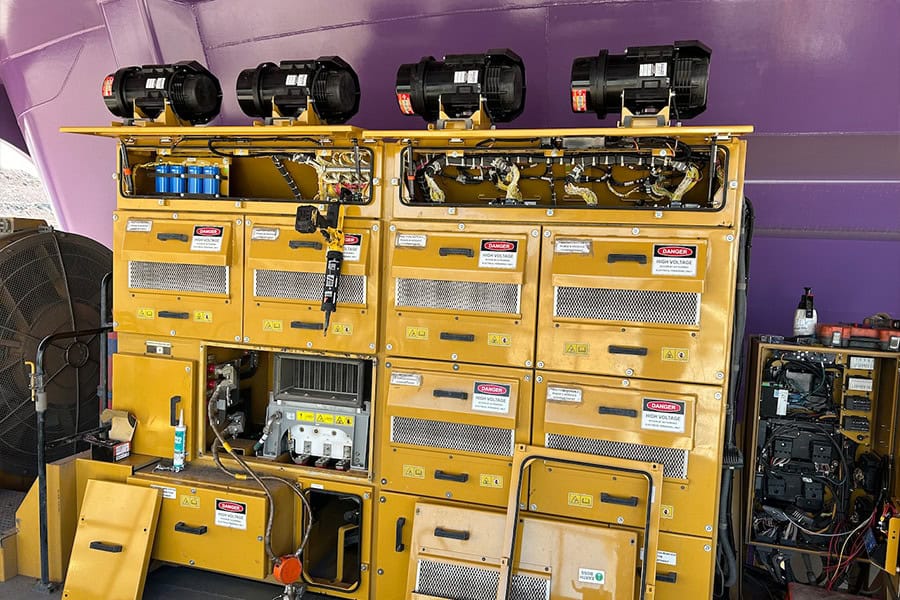
VoltAire High-Pressure Pressuriser
Equipped with an EPA E11 filter, variable speed motor and fully IP66-rated design, it delivers filtered air to help maintain positive pressure and reduce dust ingress in electrical enclosures operating in harsh environments.
Learn More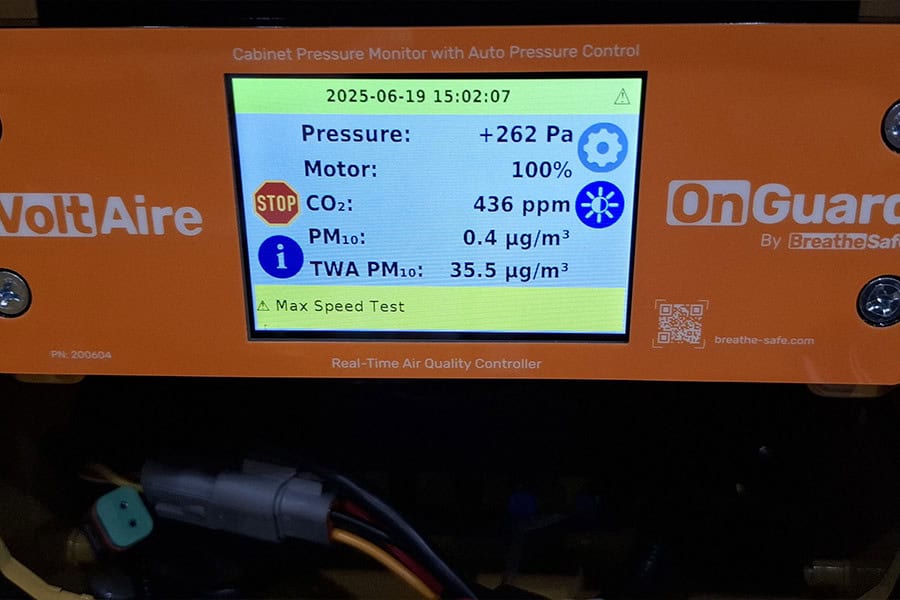
Air Quality Monitor and Controller
Provides real-time monitoring and precise control, with seamless integration into BreatheSafe’s filtration systems to support a controlled environment inside electrical enclosures.
Learn More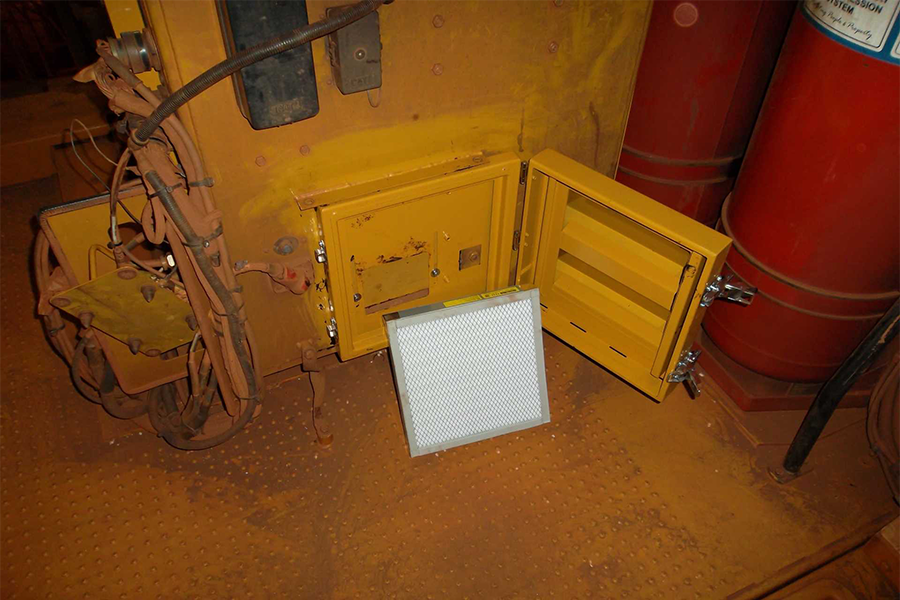
Custom Panel HEPA Recirculation Filter
Captures airborne particles from recirculated air to help maintain a cleaner enclosure environment. Its durable, OEM-ready metal housing supports straightforward integration into electrical cabinets.
Learn More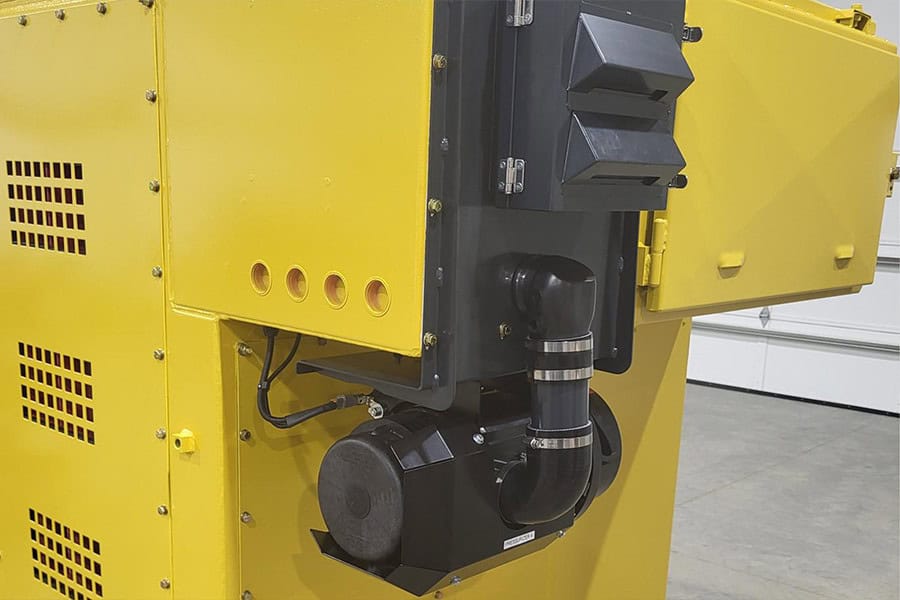
Custom Install Kit
Designed for flexibility and precision, each kit includes the components needed for seamless OEM integration and durable, efficient installation across a wide range of machine types.
How It Works
Hover over the images to play the videos
Pressurise The Cabinet To Prevent Dust Ingress
Positive pressure ensures only filtered air enters, blocking dust and contaminants. This prevents buildup on critical components, reducing maintenance and extending equipment life.
A HEPA panel filter on the outlet keeps air clean even when the machine is off, further enhancing protection and worker safety.
Thermal Management To Prevent Overheat
When the enclosure temperature rises above the setpoint, the pressuriser automatically introduces more filtered air to help reduce heat buildup.
This supports cleaner airflow through the cabinet, helping protect sensitive components, improve reliability, and reduce the risk of heat-related failure.
Air Quality Controller Monitors The Air
Our BreatheSafe controllers monitor air quality in real time, eliminating manual inspections and reducing dust exposure. By analysing particulate levels, pressure, and temperature, they provide insights to optimize performance and component longevity.
For added protection, the VoltAire OnGuard controller features a high dust concentration flush, purging contaminants with clean air when needed. This also helps regulate temperatures, preventing overheating of sensitive electronics.
Case Study
The first trial system has been in service for over 4 years. Now over 5,000 hours on the same filters, the cabin has not required cleaning since the system was installed.
Komatsu 830E HV Field Trial
HV cabinets use unfiltered air from the alternator fan to cool the heat sinks on the inverters, allowing mine dust to enter and accumulate, requiring frequent cleaning and exposing maintenance staff to hazardous dust.
To eliminate this risk and reduce worker exposure, we collaborated with a customer to develop a specialised system that prevents dust ingress, ensuring a cleaner, safer, and maintenance-free solution.
Problem
- Exposure to high concentrations of respirable dust will lead to severe irreversible lung diseases such as silicosis.
- Cabinets are subject to unfiltered air introduced via the alternator fan to cool heat sinks.
- Hazardous dust is forced through unsealed duct seams / deteriorated component gaskets into the main compartment requiring maintenance and cleaning.
- Cleaning of these compartments typically occurs every 500 hours and presents the risk of hazardous dust exposure to workers.
Designed Solution
- Cabinets have been cleaned out before installation.
- The Main HV cabinet has been fitted with 3 High-Pressure TL units.
- Arc Shoe cabinet has 1 standalone High-Pressure TL unit.
- These systems are variable speed pressurisation and HEPA H14 filters.
- Max pressure achieved with the engine off: 1200 Pa above ambient.
- Auto pressure setpoint at 400 Pa above OEM engine-driven fan pressure.
- TL units force air into HV cabinets creating positive pressure.
Achievement
- Cleaning with compressed air has ceased/worker exposure to mine dust diminished!
- The cabinet is maintaining a significantly reduced dust load.
- Internal temperature maintained relevant to ambient.
- Components/wiring easily visible for fault finding.
- Minimised static dust on components – Extended component life.
- Heavily reduced downtime for maintenance/repair costs.
- The system has been inspected at 1000, 1500, 2230 and 2800 hours and is still running the original filters.
- System capacity maintains a 57% load with no drop in sealing efficiency after 3715 hours.
- Max pressure test dropped 390 Pa to a total of 810 Pa– consistent with filter loading/truck voltage & door seals.
Frequently Asked Questions
What is an electrical enclosure pressurisation system and how does it work?
How many pressurisers does an electrical cabinet need?
The number of pressurisers required for an electrical cabinet depends on the cabinet size, internal heat load, leakage points, and the amount of filtered airflow needed to both maintain positive pressure and remove heat from the enclosure.
Some smaller electrical cabinets may only require a single pressuriser to keep dust and contaminants out. Larger MCC rooms, switchrooms, or high-heat electrical enclosures may require multiple pressurisers to generate enough clean airflow through the cabinet.
This is because an electrical enclosure pressurisation system must achieve two things at the same time:
- Maintain stable positive internal pressure
- Provide enough continuous air movement to carry heat out of the cabinet
If the airflow is too low, the cabinet may stay pressurised but still overheat. If the airflow is too high without proper design, pressure can become unstable, and filtration performance can be affected.
BreatheSafe runs airflow calculations based on cabinet dimensions, heat generated by internal components, cabinet leakage, and required exhaust airflow to determine the correct number of pressurisers needed for each enclosure.
Different electrical cabinet layouts require different airflow strategies, which is why the number of pressurisers should be designed specifically for each application.
Why does dust build up inside electrical cabinets?
Dust builds up inside electrical cabinets when the enclosure is not properly sealed, when cable entries are left exposed, or when ventilation fans pull dirty outside air directly into the cabinet.
Temperature changes can also cause cabinets to “breathe”, drawing external air into the enclosure as internal pressure changes. Over time, airborne dust, silica, diesel soot, moisture, and conductive particles can settle on electrical components.
This is why a positive-pressure electrical cabinet is often used in dusty sites. By supplying filtered air and maintaining pressure, the cabinet is less likely to draw in unfiltered external air.
How can you stop an electrical cabinet from overheating without letting dust in?
What is the difference between electrical enclosure pressurisation and cabinet cooling?
Media
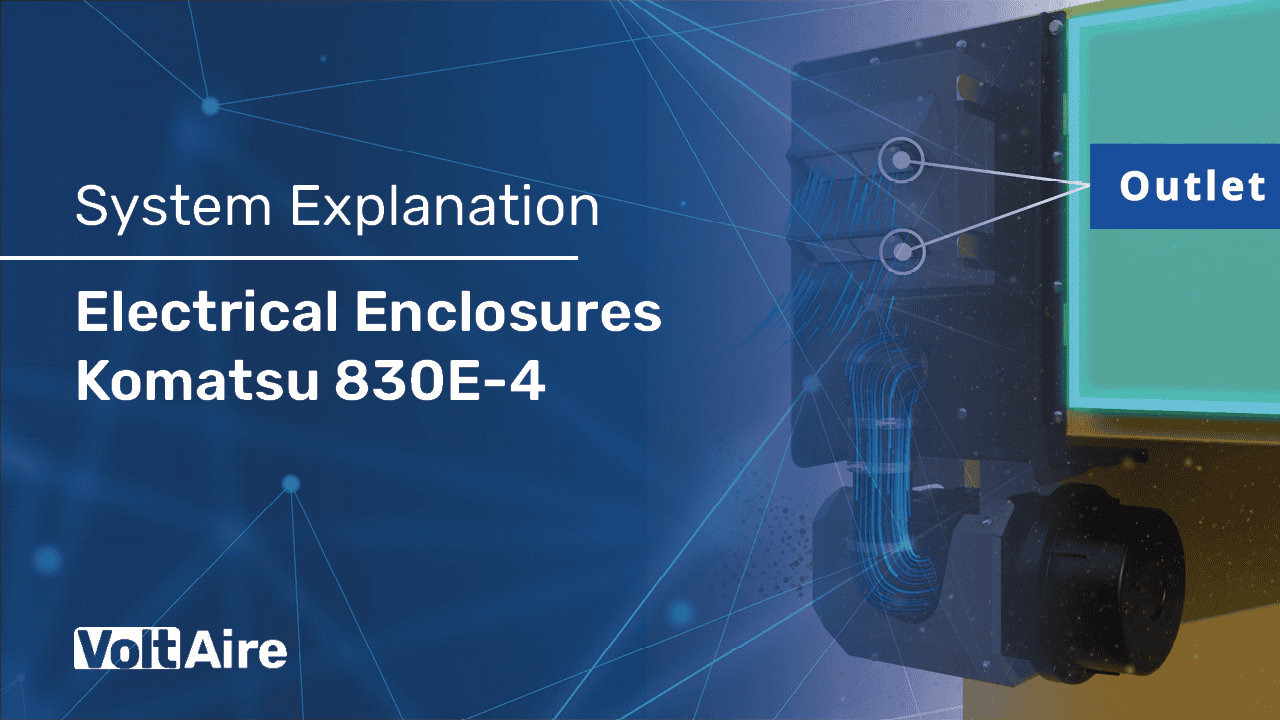
VoltAire System Explanation
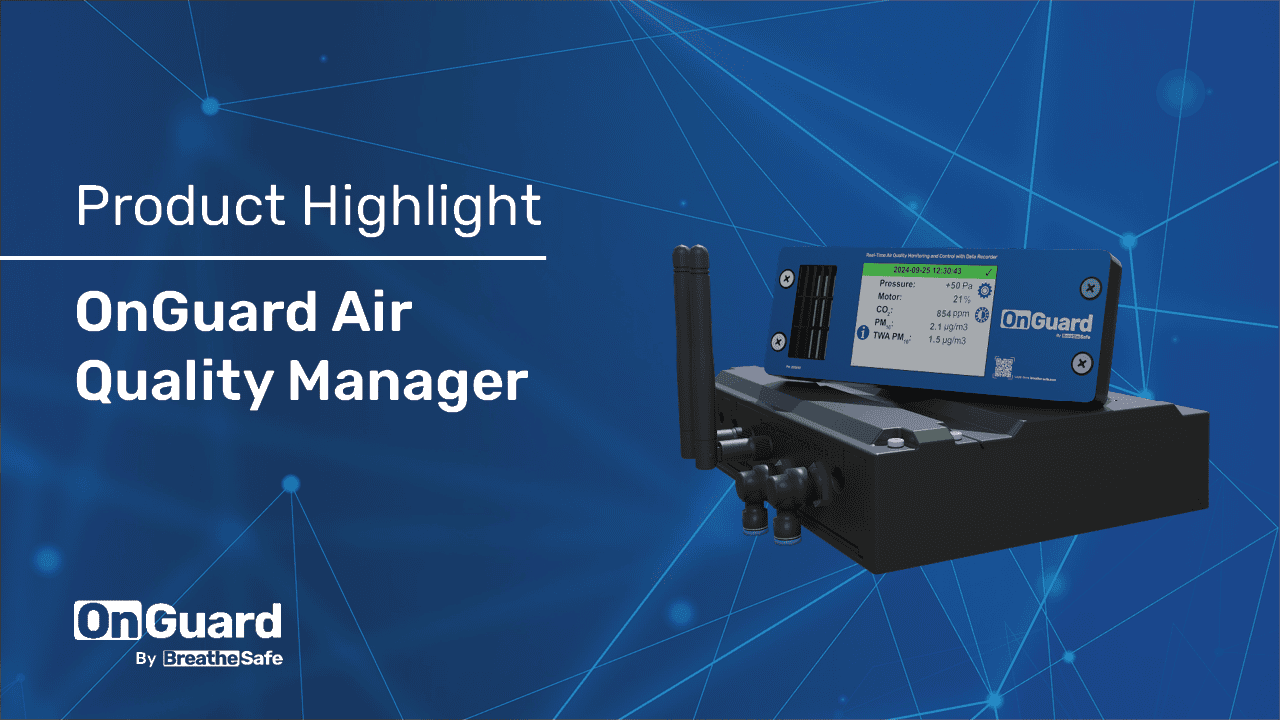
OnGuard Remote Controller
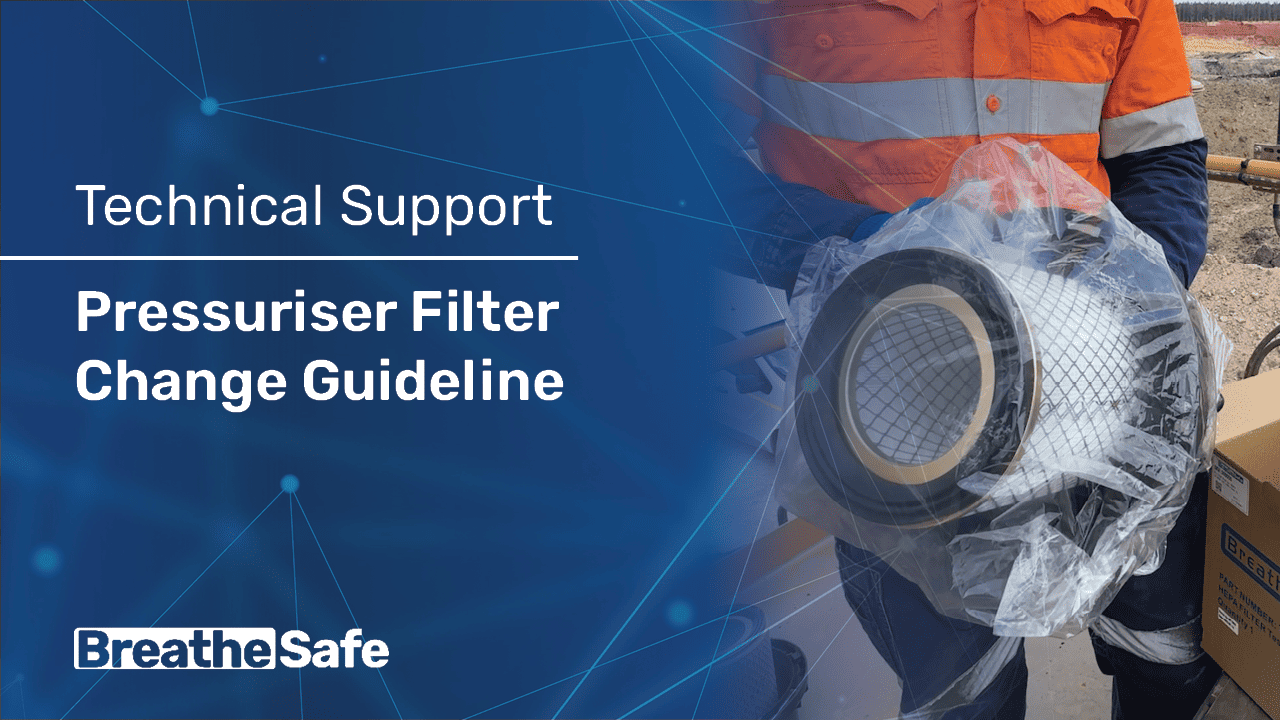
Filter Replacement Guideline
Other Solutions
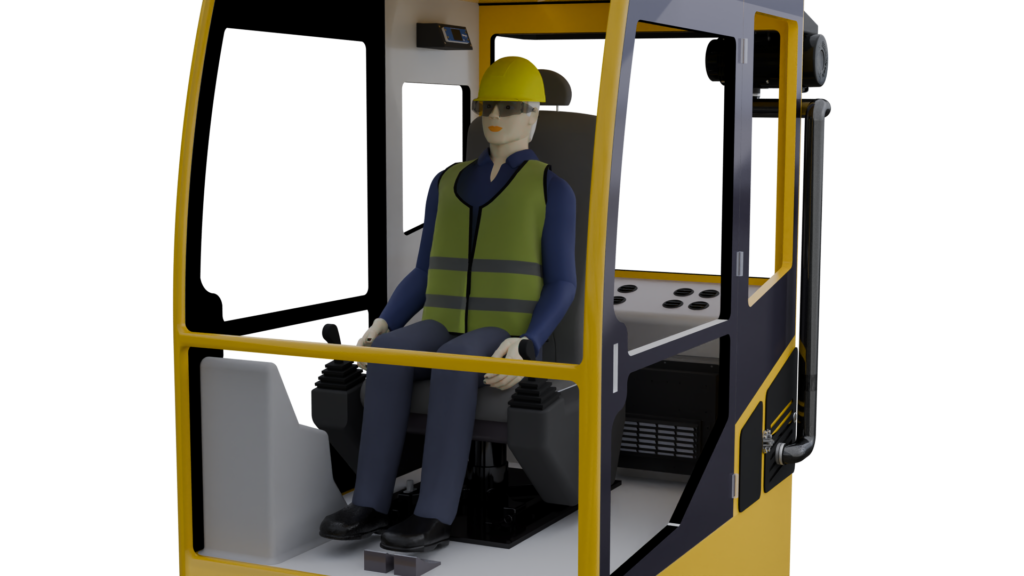
Operator Cabin Pressurisation
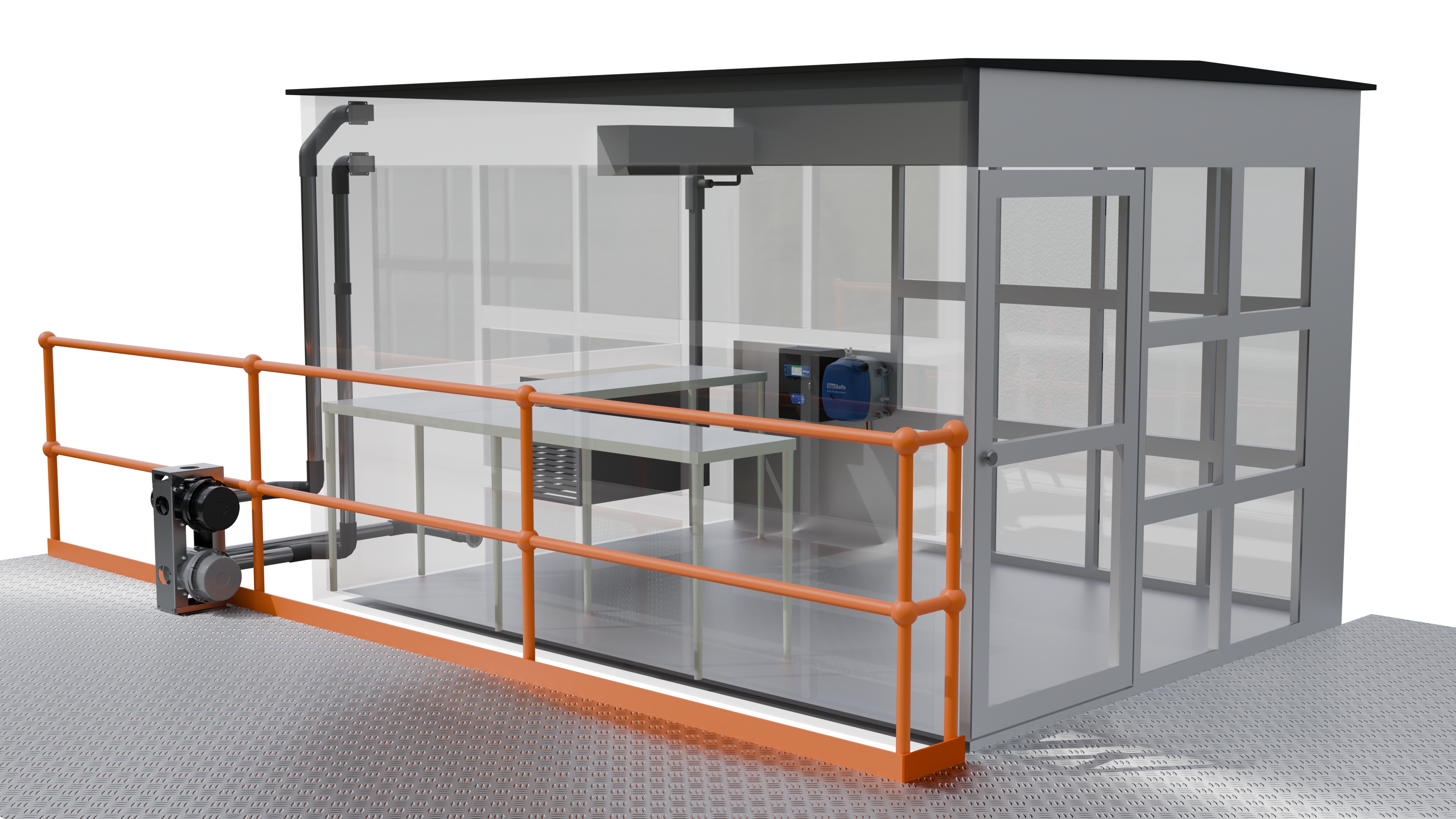
Clean Room Pressurisation

Build Your Own