
If your crews are cleaning cab filters and coils more often than the service schedule says, the cause usually sits upstream of the HVAC. Here is why it happens, what it costs, and how to break the cycle.
The short answer
- Cab HVAC systems on mining equipment clog because dust keeps getting in through the fresh air intake, worn seals and any gap the cab’s pressure can’t hold shut.
- Once filters and coils load up, airflow and cab pressure both drop. Lower pressure lets in more dust, so the system clogs faster each cycle.
- Cleaning more often treats the symptom. Holding positive pressure with HEPA filtration and monitoring stops the dust at the source and protects the HVAC between scheduled services.
Why does dust get into the cab HVAC in the first place?
A cab HVAC system is designed for comfort: it cools, heats and moves air. On a mine site it also has to keep fine dust out, and most standard setups were never built for that load. Dust gets in by three routes:
The fresh air intake. Standard fresh air filters stop coarse dust well. The fine respirable fraction passes through or loads the filter quickly in high dust conditions.
Leaks in the cab. Door seals, window rubbers, cable entries and floor penetrations wear with vibration. Every gap is a path in when the cab isn’t holding pressure.
Bypass around the filter. A poorly seated or damaged filter lets dust skip the media entirely and go straight to the coil.
The principle behind the fix: keep the cab at a higher pressure than outside, so air leaks out through any gap instead of dust leaking in. ISO 23875 sets a minimum of 20 Pa of sustained pressurisation, with 200 Pa as the upper limit. In NSW, the Resources Regulator expects 50 to 200 Pa while the machine is in use for a cabin to count as a silica control.
What happens inside the HVAC once dust gets in?
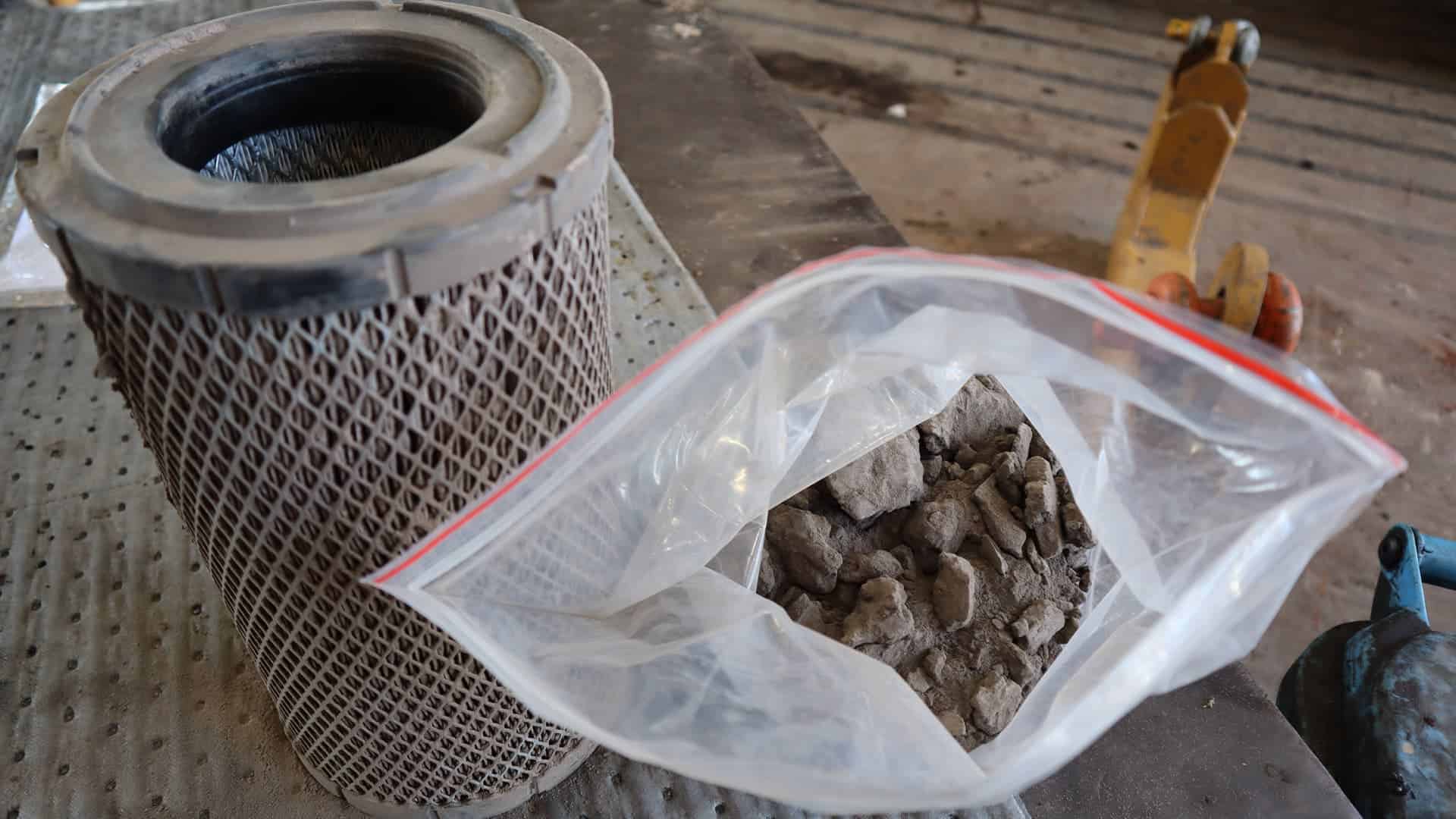
Dust lands in four places, and each one costs cooling, airflow or pressure.
| Where dust builds up | What it does |
|---|---|
| Fresh air and recirculation filters | Restricts airflow to the operator and cuts cab pressure |
| Evaporator coil | Coats the fins, slowing heat transfer and cooling |
| Condenser coil | Makes the system work harder, shortening compressor life |
| Ducts and blower | Spreads settled dust back into the operator’s breathing zone |
Regulators see the same pattern on site. When the NSW Standing Dust Committee investigated silica exposure exceedances among surface mobile equipment operators, worn or damaged door and window seals were a common finding. Those seals weakened cab pressurisation and let dust in.
The cycle maintenance teams get stuck in
Why doesn’t cleaning more often fix it?
Shortening the cleaning interval keeps the machine running, but the dust keeps arriving at the same rate. You pay for it three ways.
Exposure for the maintainer
Blowing out filters, coils and ducts with compressed air puts settled dust back in the air, right where the technician is working. Safe Work Australia lists compressed air among the cleaning methods that expose workers to respirable crystalline silica.
Damaged filters
Blowing a filter clean can split the media or unseat the seal. The filter then lets dust bypass to the coil, so the next clean comes sooner.
Downtime and labour
Every clean is a machine off line and a technician’s hours. Across a fleet in high dust conditions, that becomes a standing line item in the maintenance budget.
The operator carries the cost too. A cab losing pressure means fine dust in the breathing zone for the whole shift, and comfort drops as cooling capacity falls.
What stops the vicious cycle?
Stop the dust before it reaches the HVAC. That takes four things working together:
| Control | What it does for the HVAC |
|---|---|
| Positive pressure | Keeps the cab above outside pressure, so air leaks out through gaps instead of dust leaking in |
| Cab sealing | Closes the worn seals and penetrations so the pressure can hold |
| HEPA filtration | Captures the fine fraction on the fresh air supply and cleans recirculated air through a HEPA return air filter |
| Monitoring | Shows cab pressure and dust levels live and alarms when pressure drops, so a loading filter or failed seal shows up between scheduled services |
A HEPA air pressuriser works alongside the existing air conditioning. The A/C keeps doing the cooling, and it gets cleaner air to work with. See how the full operator cabin pressurisation system fits together.
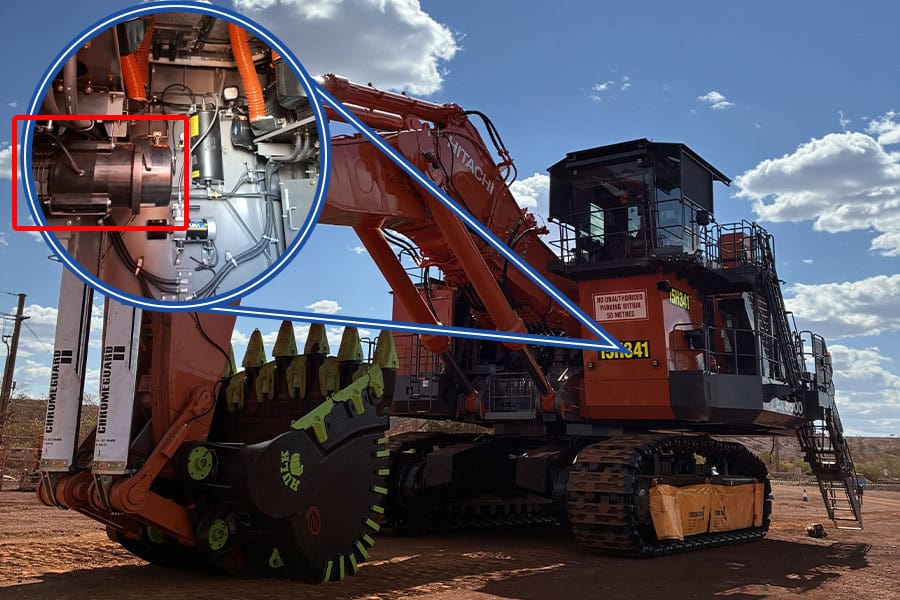
Case study · WA iron ore
Hitachi EX3600-7 excavator
Operators were breathing fine respirable dust in the cab despite regular air conditioning servicing. BreatheSafe fitted a customised system with HEPA fresh air filtration, a HEPA return air filter and automatic pressure control. After commissioning, the site reported:
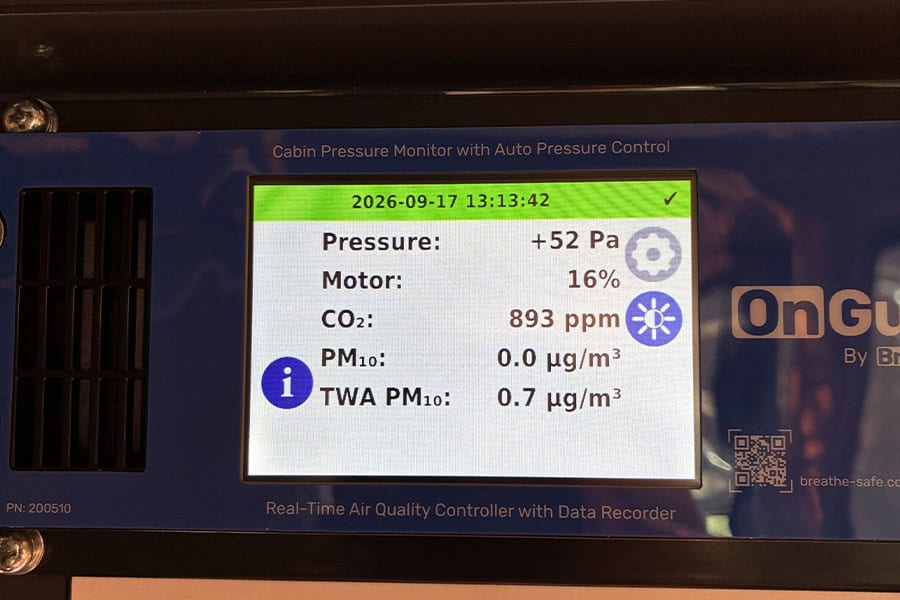
The OnGuard controller recorded +52 Pa cab pressure and a PM10 reading of 0.0 µg/m³ on 17 September 2026.
A maintenance checklist for cab HVAC in high dust
Use these checks to find out whether your HVAC is fighting a dust problem or a pressure problem.
| Check | What to look for | What it tells you |
|---|---|---|
| Cab pressure, doors closed | Below 20 Pa (ISO 23875), below 50 Pa on NSW sites, or dropping between services | The cab can’t hold dust out; filters or seals are the cause |
| Pressuriser load | Running above 80% of capacity | The filter is loading up and due for a change, even before the scheduled service |
| Filter seating and seal | Dust on the clean side of the filter or housing | Air is bypassing the media and going straight to the coil |
| Evaporator coil | Dust on the face of the fins | Filtration upstream isn’t stopping the fine fraction |
| Door and window seals | Dust trails, light gaps, worn or torn rubbers | Leak paths that pressure has to overcome |
| Cleaning method | Compressed air or dry sweeping inside the cab or on filters | Exposure risk for the technician and likely filter damage |
| Records | No pressure or dust readings between services | A loading filter or failed seal goes unseen until the next scheduled service |
Is your cabin holding pressure?
Send us the machine make and model and we will confirm the kit and what the install involves.
Frequently asked questions
How often should cab pressuriser filters be changed?
Follow your site’s maintenance schedule. If the site doesn’t specify an interval, change the filters every 500 operating hours.
Between services, watch the pressuriser itself. As a filter loads with dust, the fan has to work harder to hold the same cab pressure. BreatheSafe recommends changing the filter once the pressuriser is running above 80% of its capacity, even if the scheduled change isn’t due yet. On an OnGuard controller you can read this live on the display, so operators and maintainers see it without opening the filter housing.
Record every change with the date, machine hours and the pressure reading before and after. That history shows whether a machine needs a shorter interval or has a seal problem.
Can I clean cab filters with compressed air?
No. Blowing out a filter releases the fine dust it captured into the air around the technician. Safe Work Australia lists compressed air among the cleaning methods that expose workers to respirable crystalline silica, and the NSW Standing Dust Committee advises cleaning cabins with a HEPA vacuum or wet method instead.
It also damages the filter. HEPA media is a fine glass fibre mat, and a jet of air can tear it or unseat the seal. The filter may look clean afterwards and still let dust bypass to the coil.
Replace loaded HEPA filters instead of cleaning them. Bag the used filter at the machine, and wear suitable respiratory protection while you change it.
Does a pressuriser replace the air conditioner?
No. The air conditioner controls temperature. The pressuriser supplies HEPA-filtered fresh air to the cab and holds it at positive pressure, and a HEPA return air filter cleans the air already inside.
The two work together. Because the HVAC now receives clean air, its own filters, evaporator and ducts stay cleaner for longer. On the Hitachi EX3600-7, the site reported up to 30% lower air conditioning maintenance costs after the upgrade.
BreatheSafe kits are matched to the machine make and model, so the pressuriser connects to the existing HVAC without replacing it.
What cab pressure should we aim for?
ISO 23875 sets a minimum sustained pressure of 20 Pa and a maximum of 200 Pa. The pressure needs to hold with the doors and windows closed while the machine is operating, not only at commissioning.
Some regulators set a higher floor. The NSW Resources Regulator defines a fully enclosed cabin with high efficiency filtration as one kept between 50 and 200 Pa while in use, with a real-time monitor that alarms if pressure drops, where possible.
Check which requirement applies to your site. Our ISO 23875 guide covers how to test cab pressure.
Do we need H13 or H14 HEPA filters?
Both are HEPA grades. H13 captures at least 99.95% of particles at the most penetrating particle size, and H14 captures at least 99.995%.
The NSW Resources Regulator accepts either grade, on both the cabin air intake and the recirculation system where possible. For high dust and respirable silica, H14 gives the larger safety margin.
What should a pre-start cab check include?
A quick daily check catches most dust problems before they reach the operator or the HVAC:
- Cab pressure is holding with doors and windows closed
- Door and window seals are intact, with no tears or gaps
- The cab floor, seat and dash are free of settled dust
- Any pressure or filter alarm on the controller has been actioned
The NSW Standing Dust Committee recommends a pre-start cabin cleaning check and regular seal inspections for surface mobile equipment.