
A leading mining OEM builds 80 kW and 200 kW underground mine chargers. The chargers were originally fitted with air conditioning units to keep their electrical enclosures cool, but underground conditions quickly exposed the weakness in that setup. Once dust got into the enclosures, cooling efficiency dropped and components started failing, again and again.
Every failure meant a charger out of service, repairs, replacement parts and lost time. As these assets age, spare parts and qualified service people get harder to find, so each failure costs more downtime than the last.
This case study explains why the chargers kept failing, why air conditioning couldn’t fix it, and how VoltAire electrical enclosure pressurisation replaced the air conditioners and kept the electronics inside within safe temperature limits.
Let’s get into it.
Why Were the Underground Mine Chargers Failing?
Mine chargers carry power electronics, control boards and other heat generating components inside sealed electrical enclosures. Underground, those enclosures sit in fine airborne dust and high ambient heat, often for long shifts with limited airflow.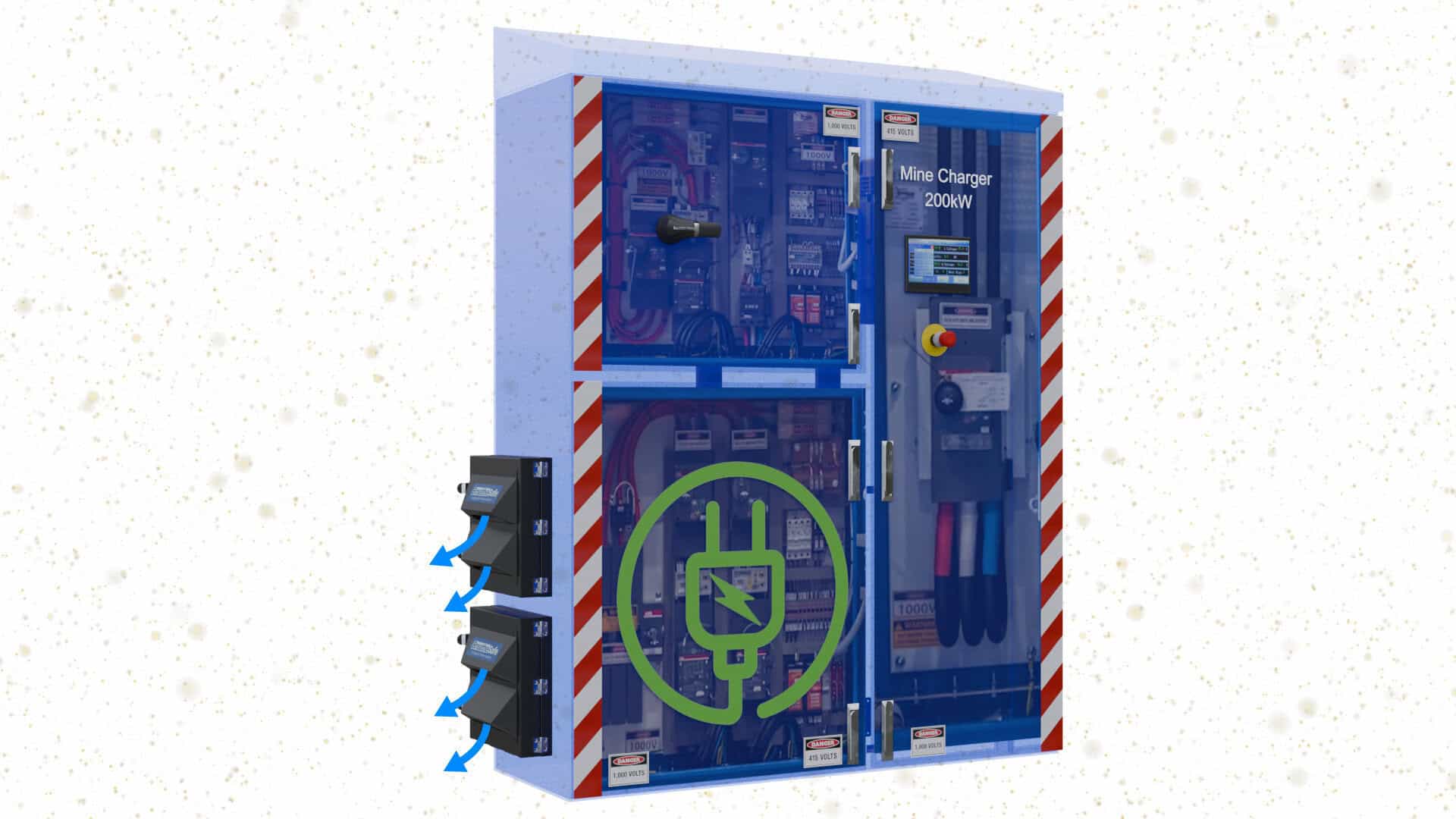
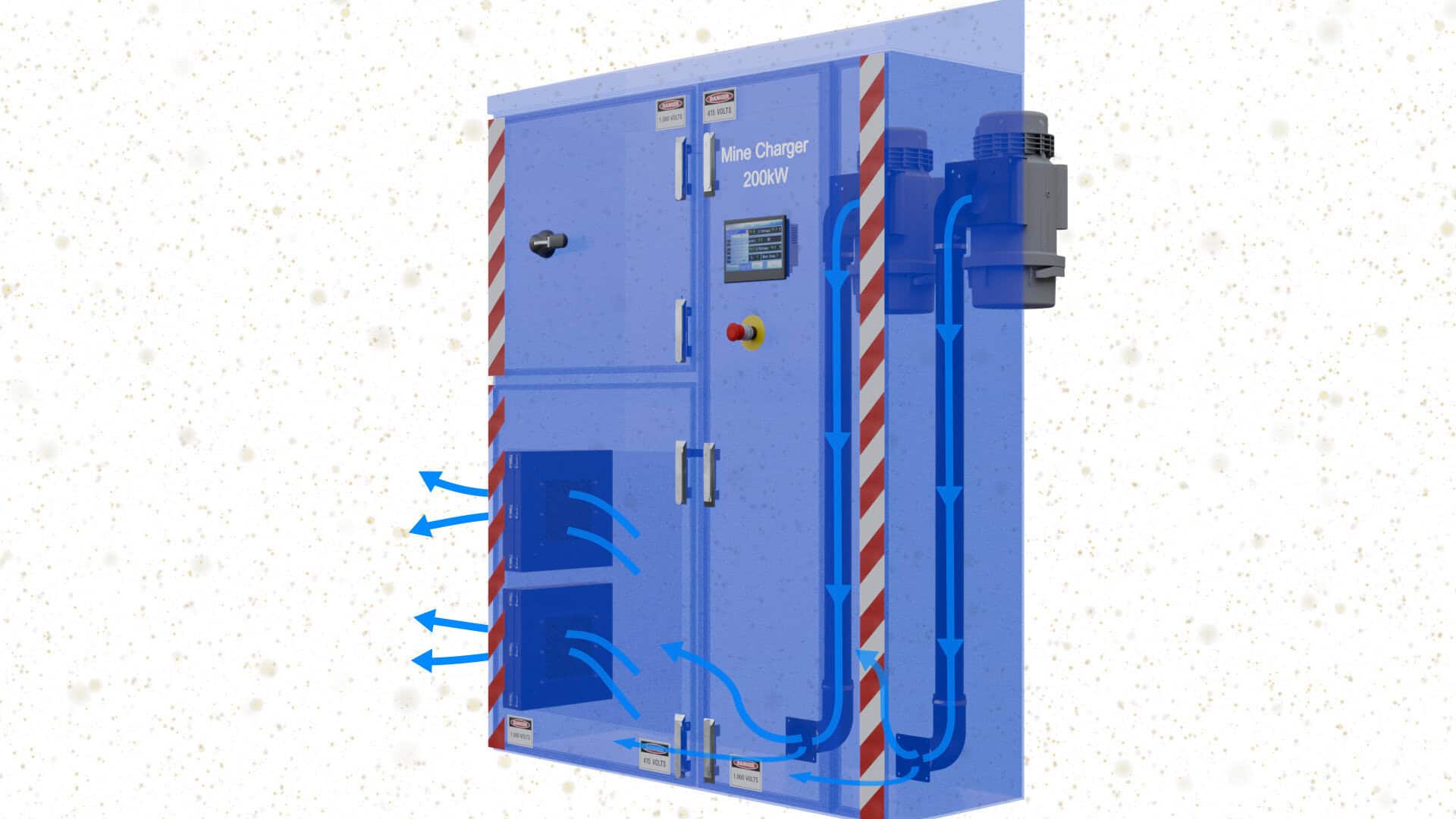
A 200 kW underground mine charger fitted with VoltAire, showing the filtered airflow path.
Dust Got Into the Charger Enclosures
The chargers relied on air conditioning units to manage enclosure temperature. Once dust entered, it settled on the electronics and fouled the cooling system itself, so the enclosures ran hotter just as the components inside became more vulnerable. The result was repeated component failures, each one taking a charger out of service until it could be repaired.Ageing Assets Raise the Cost of Every Failure
Electrical enclosures house critical equipment such as motor drives, PLCs, transformers and other sensitive electronics. As that equipment ages, replacement parts become harder to source and fewer people are qualified to service it. Preventing failure becomes far cheaper than repairing it.
Resources Safety & Health Queensland warns that dust build-up in electrical enclosures can cause critical component failure, leading to electrical faults and fire. Its guidance note QGN34 recommends supplying clean, filtered air under positive pressure to keep dust out.
Why Air Conditioning Couldn’t Protect the Chargers
Air conditioning is designed to control temperature. It was never designed to keep fine dust out of an enclosure working underground. On these chargers, that gap turned into a cycle of failures.Cooling Dusty Air Doesn’t Stop the Dust
Once dust reached the enclosure, it coated the components and the cooling system together. Cooling efficiency fell, heat and dust built up on the electronics, and components failed. Each repair returned the charger to the same conditions that caused the failure.A Higher IP Rating Isn’t Enough on Its Own
Sealing the enclosure helps, but most enclosures still need cooling air. QGN34 notes that even IP54 enclosures still take in dust when they are cooled with unfiltered vented air, and recommends at least IP5X in high dust environments.
The enclosure needed clean cooling air and a way to stop dust at every gap. That is what positive pressure with filtered air provides.
How VoltAire Protected the Mine Chargers
BreatheSafe replaced the failing air conditioning units with a VoltAire system. Instead of cooling dusty air, VoltAire keeps the dust out and manages temperature in the same system.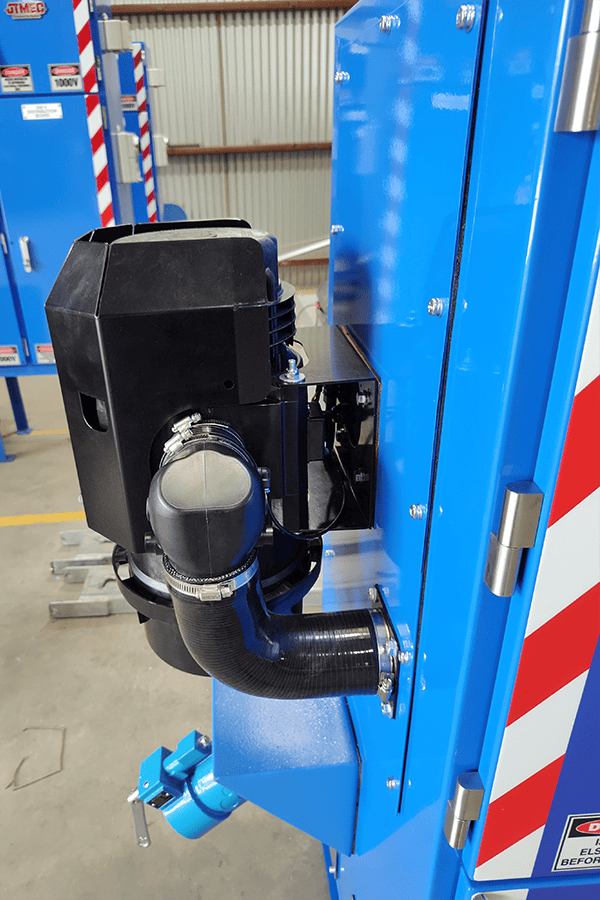
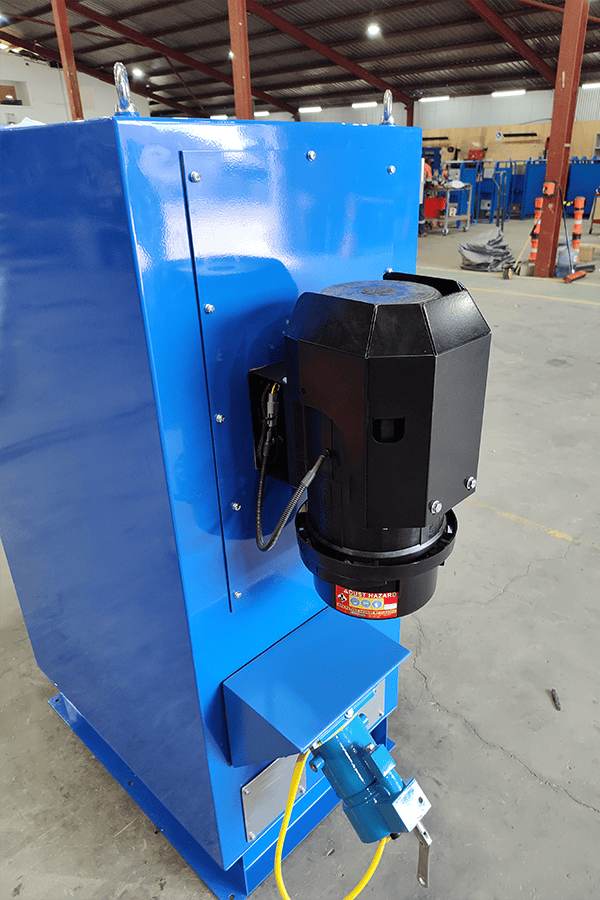
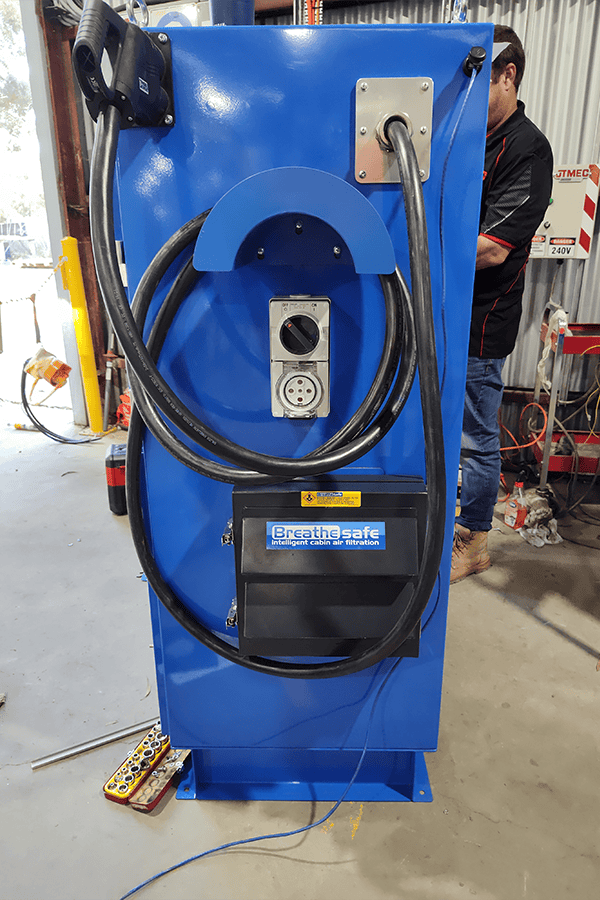
VoltAire fitted to an 80 kW underground mine charger, shown from three angles.
Pressurisers Keep the Enclosure at Positive Pressure
VoltAire pressurisers supply filtered air into the enclosure and hold it above the surrounding pressure. Air pushes outward through any gap, so dust can’t be drawn in.HEPA Vents Keep the Air Path Filtered
HEPA vents keep the enclosure’s air path filtered, so the fine dust that fouled the old air conditioners never reaches the electronics.Temperature Probes Trigger More Cooling Automatically
Temperature probes are wired into the charger’s control circuit. As cabinet temperature approaches its limit, the system automatically increases airflow and cooling to keep components within their operating range.OnGuard Monitors the System Remotely
The latest revisions include the VoltAire OnGuard controller, which monitors and controls air quality parameters remotely and provides reporting, so a change shows up before it becomes a failure.What Changed After VoltAire Was Installed
The VoltAire installation resolved the dust and temperature issues and extended the life of all components. The chargers now operate within safe temperature limits, reducing the risk of unexpected downtime and protecting the OEM’s MTBF (mean time between failures) ratings.Before and After VoltAire
| Before VoltAire | After VoltAire |
|---|---|
| Dust got in and compromised the enclosures. | Positive pressure and HEPA vents keep dust out. |
| Cooling efficiency fell once dust got in. | Temperature probes trigger more airflow and cooling as limits approach. |
| Repeated component failures and ongoing repairs. | Longer component life and reduced maintenance and replacement costs. |
| No early warning of a problem. | OnGuard remote monitoring and data visualising in real time. |
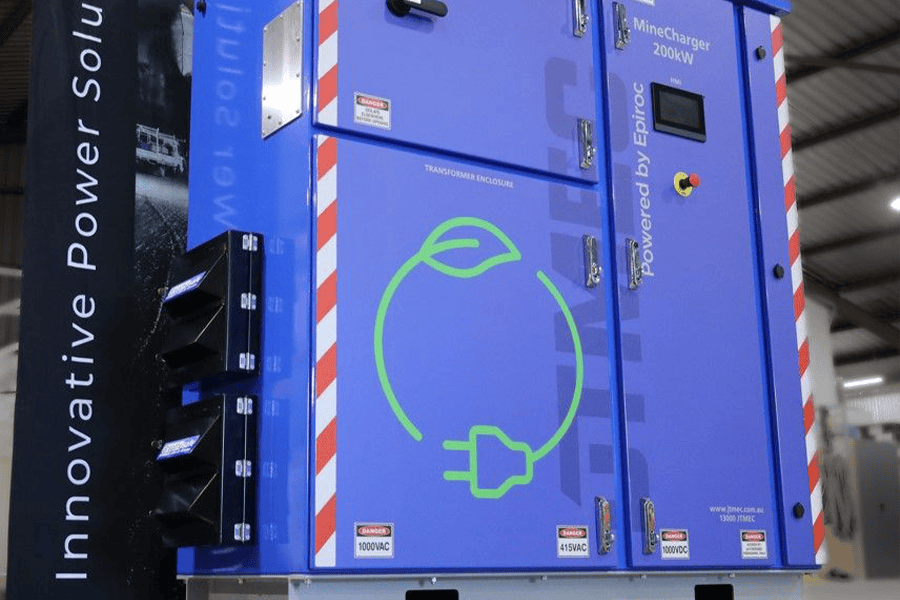
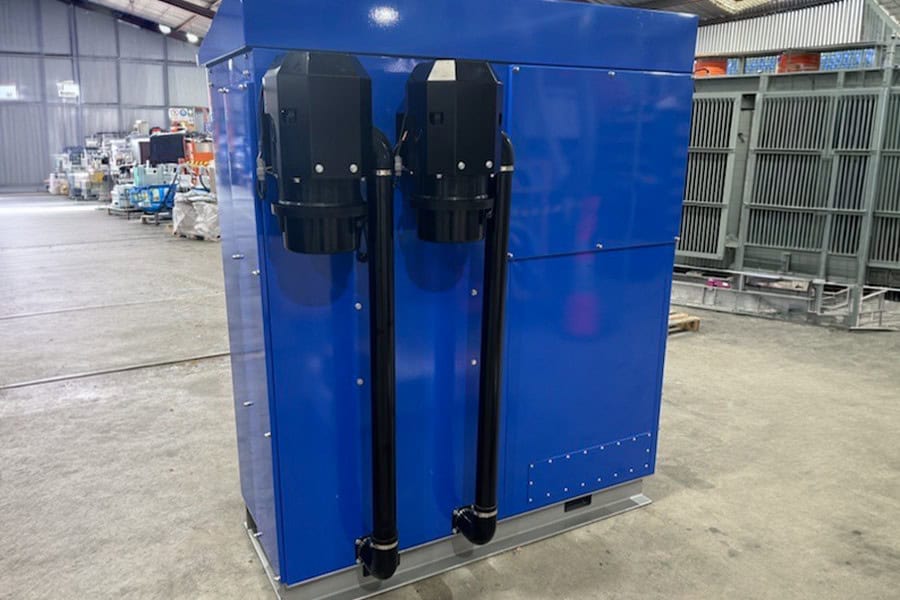
VoltAire HEPA panel filter outlet (left) and pressuriser (right) on the 200 kW charger.
Where Else This Applies
The same approach protects any enclosure that has to work in dust and heat: motor drives and PLCs where one failure can stop a production line, transformers and chargers in dusty plant areas or underground, and ageing assets where spare parts and qualified service people are hard to find. VoltAire SolutionFive Key Takeaways
- 1Air conditioning cools, but it doesn’t keep dust out. On these underground chargers, dust fouled the air conditioners and the electronics together, leading to repeated failures.
- 2Dust and heat work together. Once dust gets in, cooling efficiency falls and components run hotter, so failures arrive faster.
- 3Positive pressure stops dust at every gap. VoltAire pressurisers hold the enclosure above outside pressure, so air pushes out instead of dust getting in.
- 4Thermal management is built in. Temperature probes in the control circuit increase airflow and cooling automatically as limits approach.
- 5The result is longer component life and protected MTBF ratings. The chargers now run within safe temperature limits with lower maintenance and replacement costs.
Wrapping up
Protect Your Electrical Enclosures from Dust and Heat
If your chargers, drives, PLCs or transformers are failing from dust or heat, or your cooling system is part of the problem, enclosure pressurisation gives you a proactive, continuous form of protection. VoltAire keeps dust out with filtered positive pressure and manages temperature in the same system, so your enclosures stay cleaner, cooler and more reliable from the moment it is installed.Dust or heat in your electrical cabinets?
Tell us the enclosure and site conditions, and we will confirm what VoltAire needs.